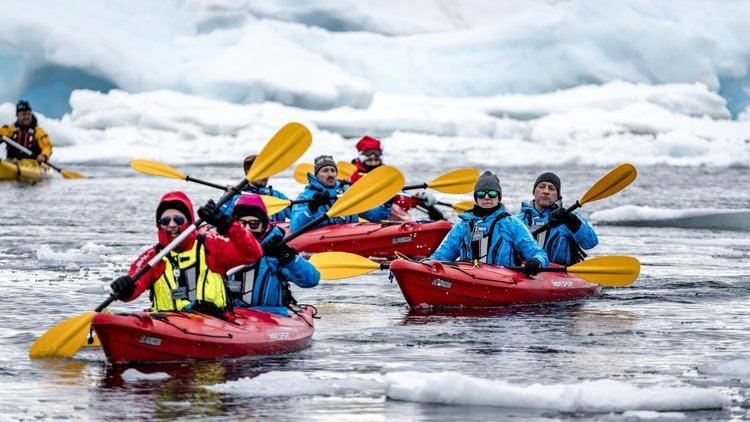
Kayaking
Currently fullPaddle amongst the icy waters of the Arctic! Prior kayaking experience is required.
A full hash charter to Svalbard aboard the Ocean Albatros. 10 to 17 July 2027.
This is a private charter reserved exclusively for hashers and their guests. A full ship takeover!
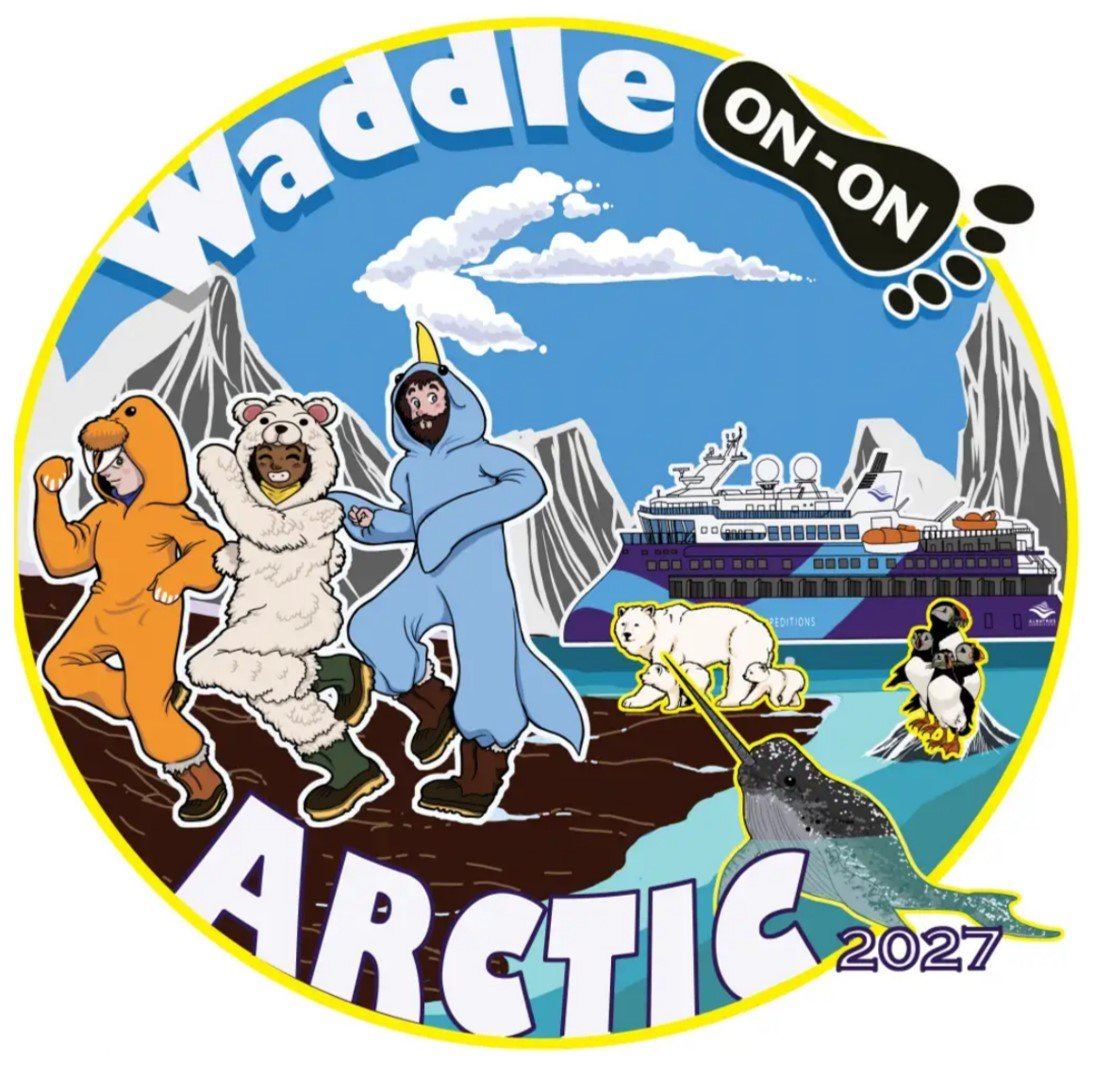
Join your exquisite hosts, Liquor Up and Occupied, on this Waddle On-On Arctic expedition to the last stop before the North Pole!
ON-ON!!
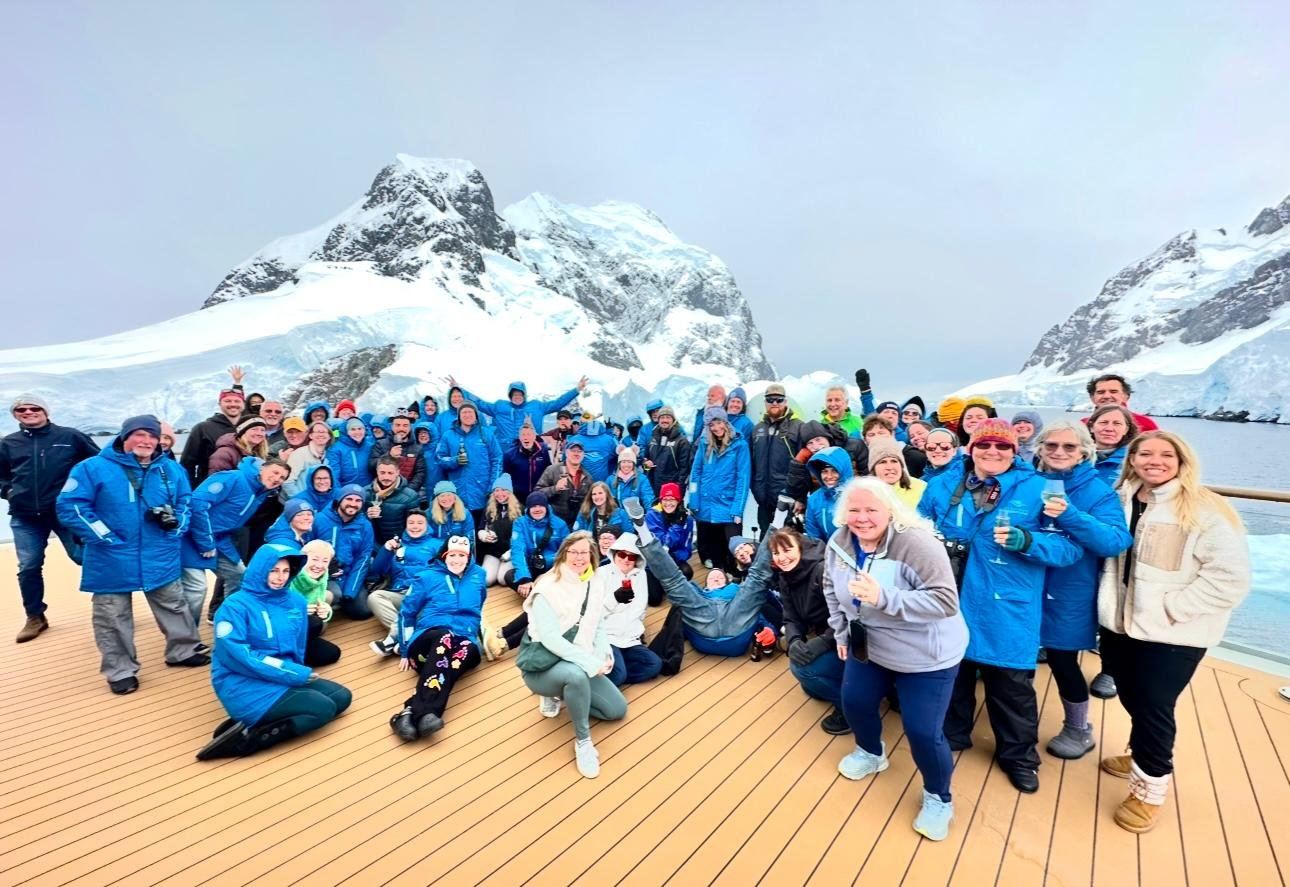
Join Liquor Up and Occupied as they host their third epic Waddle On-On expedition, this time on the other end of the globe! We'll explore the northern edges of the world, sailing the Svalbard archipelago, known as the land of the polar bears! This unforgettable adventure is a full-ship private charter, meaning only members of the hash community and their friends will be invited to sail with us!
This trip begins with a pre-cruise night in Oslo. You can arrive at any time in the Norwegian capital and check in to the hotel during the afternoon. The next day, we fly to Longyearbyen, the northernmost permanently inhabited settlement in the world! We'll have some free time to visit the town before boarding the ship in the afternoon.
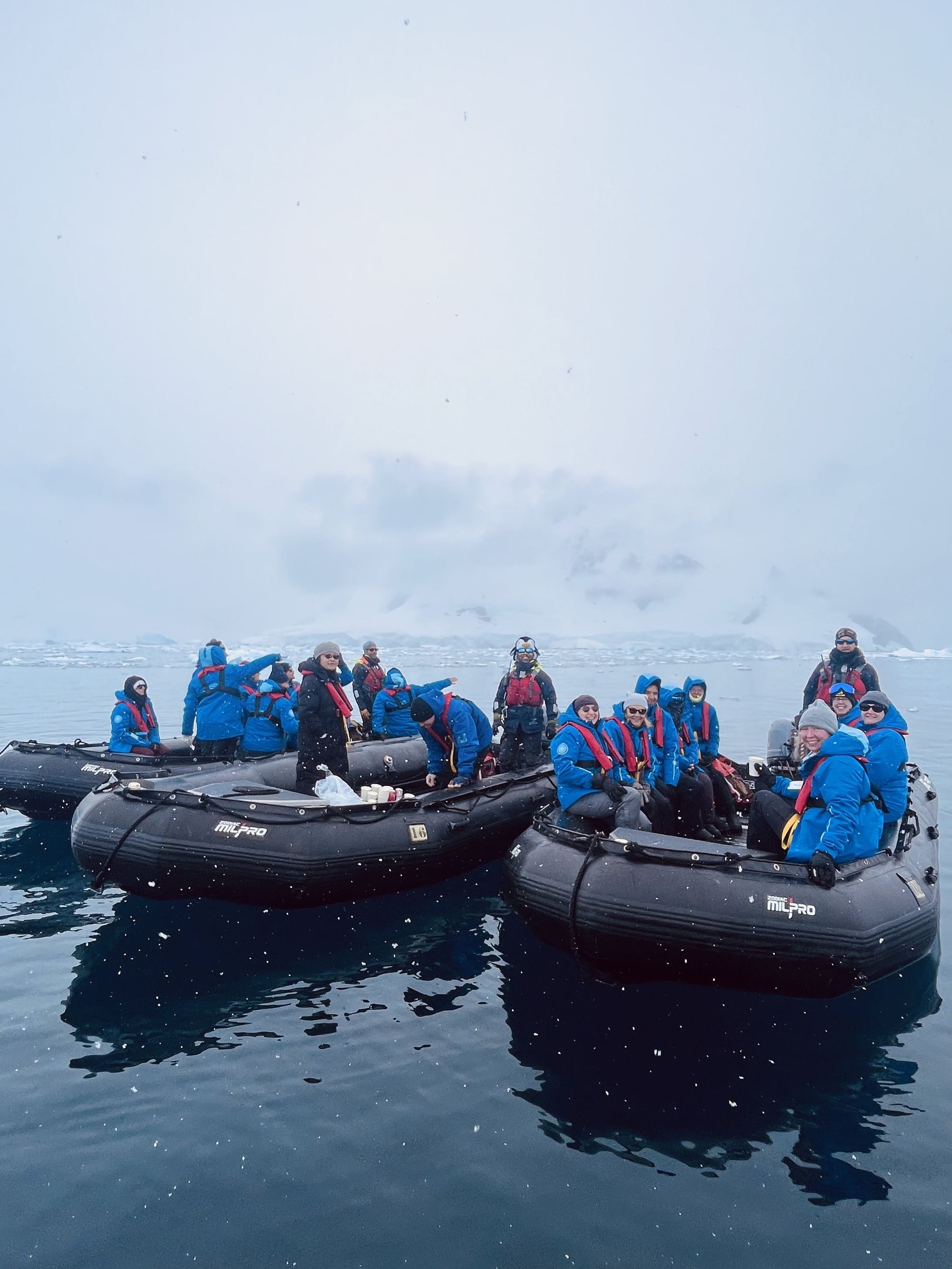
On the next day our adventure begins! We will attempt to disembark the ship at least twice a day, so every guest on board will set foot on land in the Arctic many times. We'll be searching for wildlife like reindeer, Arctic foxes and seabirds on land, and walruses, whales and other marine life around the glaciers in our state-of-the-art Zodiacs. Each Zodiac ride is captained by a member of the expedition team who will be there to educate, inspire, and answer any questions you may have (see the day-by-day itinerary below).
We will also be constantly looking out for polar bears! But don't worry, we will watch them from a safe distance. :)
While on board, your hosts and expedition team will have a wide range of activities and celebrations to keep you laughing and smiling! Our company, Antarctica Travel Group, will be on board to make sure your experience is beyond expectations. With over ten years of experience organising and hosting trips in Antarctica, and now venturing to the Arctic, we will work with the Captain, expedition team and hosts to make sure no box is left unticked!
Board your flight in Norway and arrive in Longyearbyen, Svalbard: the world's northernmost... everything! This remarkable little town is not only the northernmost town in the world (if one excludes the tiny research community of Ny-Ålesund, slightly further north on Svalbard), but also hosts the world's northernmost civilian airport, schools, bank and supermarket. The town's rugged frontier edge belies a core of warm Nordic hospitality and coziness: hyggeligt, as we say in Denmark!
Immediately after landing in Longyearbyen, you find yourself in a different world. The chilly Arctic breeze can be felt as soon as you step onto the tarmac, and the famous signpost outside the terminal reminds visitors how far north they really are, as well as to keep watch for bears! The snow-capped mountain Hjorthfjellet looms over the airport on the far side of Adventfjorden, and in the distance the saw-toothed peaks and languid glaciers of northern Spitsbergen can be seen.
After arrival, you will board the waiting Ocean Albatros. After our mandatory safety briefing and lifeboat drill, head onto the outer decks to enjoy a glass of champagne while watching your expedition vessel leave civilisation behind... and set a course for adventure!
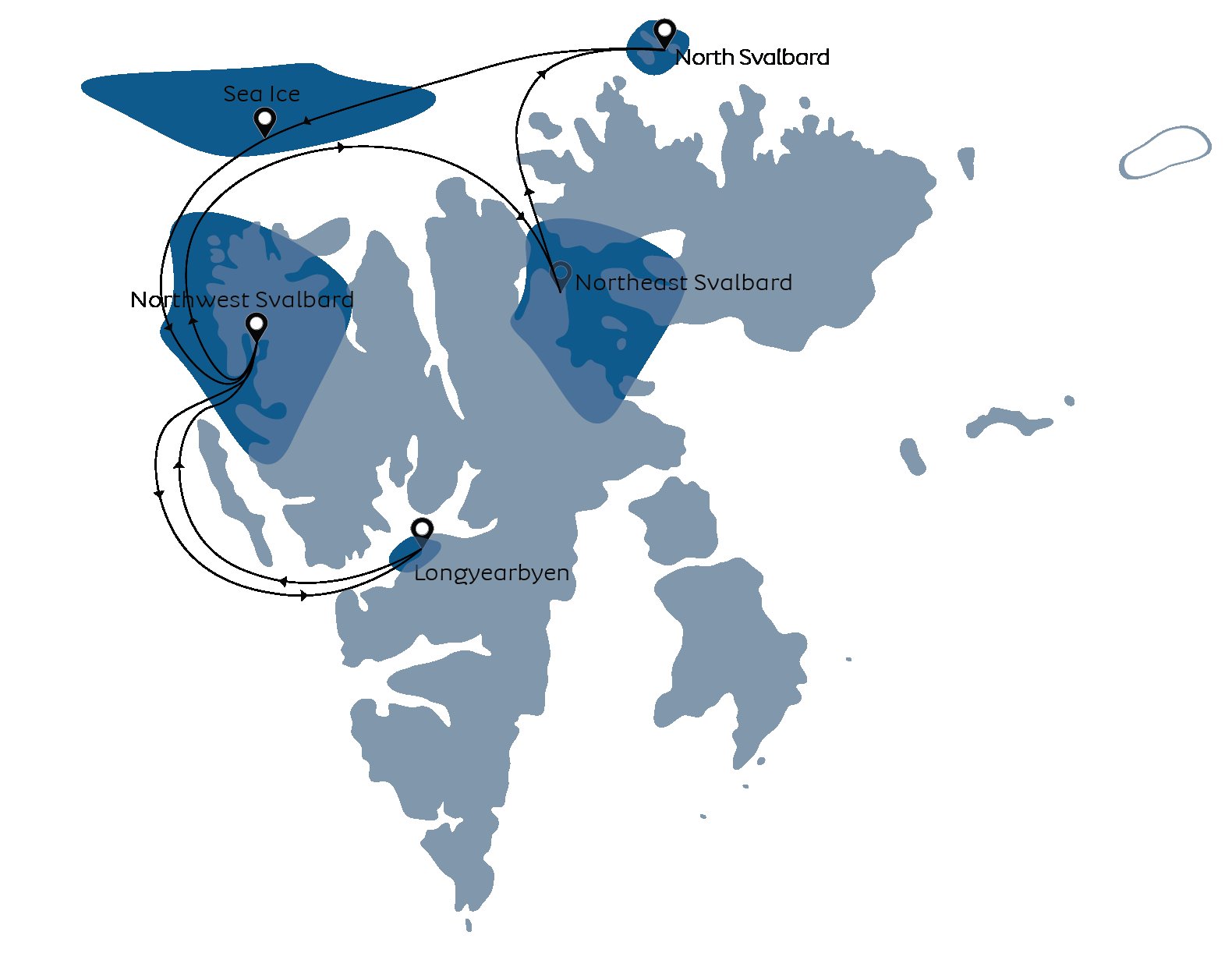
One of the largest protected wilderness areas in Europe, Northwest Svalbard was declared a national park in 1973. The area is famed for its history, which documents some of the earliest human arrivals on Svalbard. While Norse explorers may have sighted these icy shores during the Viking Age, the first definite arrival was the expedition of Willem Barentsz, the legendary Dutch explorer for whom the Barents Sea is named. Now protected from human disruption, when Barentsz arrived in 1596 he noted the vast numbers of whales and seals, which soon fell prey to English and Dutch whalers who arrived within a decade to pillage the area's wildlife. The area occupied the triple point between land, sea and ice, and as such was the perfect location from which to harvest the gentle giants of the oceans. Sites used to render whale carcasses for their precious oil include the Dutch settlement of Smeerenburg, where the remains of 17th-century blubber ovens and building foundations can still be seen. Other sites, such as nearby Ytre Norskøya, record the darker side of this industrialised slaughter, where hundreds of young men who hoped to make their fortunes are buried thousands of miles from home.
Today, all that remains from this period are bones and the scant remnants of human habitation. Slowly reclaimed by creeping Arctic nature, the region is now a nature lover's paradise. Tiny Arctic poppies and purple saxifrage defy the brutal conditions to flower in the brief summer, while geese, eider ducks and other seabirds return to the islands to raise their young. Walrus can be found hauled out on beaches, and we must always be on careful lookout for wandering polar bears in this once again wild region.
In the morning we cruise into the vast icy wilderness of northeastern Svalbard. This region does not receive the ocean currents which keep western Svalbard warm and wet, so the environment is radically different, with rocky polar desert landscapes. Vast glaciers flow from the mountains into the sea, which is often choked with ice, even in summer.
While it may appear barren, the truth is it is anything but. Hardy animals such as Arctic foxes eke out a living on these chilly shores, constantly on the lookout for prey. In the cliffs above the sea, hundreds of thousands of seabirds crowd onto rocky ledges, carefully tending their precious eggs. While the coastal waters are cold, they are incredibly productive; shellfish grow in abundance, and these in turn are preyed upon by walrus, which are common in the area.
The exact locations we visit will depend on the sea, wind and ice conditions, which vary year on year and can change rapidly even in summer. This is the essence of polar exploration: moving with the rhythms of Mother Nature, and taking the opportunities to explore which she provides!
Now we reach some of the northernmost pieces of land on Earth: the northerly coasts of Svalbard, barren landscapes almost permanently beset by ice. With luck we may reach the island of Nordaustlandet and hopefully the seven (or nine, depending on how you count) smaller islands of Sjuøyane in the far north of Svalbard. These almost vegetation-free, rocky islands lie around 1,000 km further north than mainland Norway's famous Nordkapp.
Weather permitting, we will land and walk upon these most northern landmasses. The high Arctic islands are quite barren, and only moss and lichens cover the stones. The birdlife is rich here, with flocks of grazing geese and some of the rarer gulls frequently seen on these islands. Definitely bring your binoculars!
At the end of the day, we will start cruising towards the Arctic ice pack, which stretches from Svalbard to the North Pole.
An icy breeze touches your exposed cheeks. The scent of snow and sea fills your nostrils. Sunlight reflects off the floating ice, illuminating the clouds overhead. Enter an environment like no other: the vast, shape-shifting realm of floating ice which crowns our planet. The ever-changing ice pack to the north of Svalbard stretches from this already isolated archipelago to the North Pole, and onwards across the Arctic Ocean towards the northern shores of Chukotka and Alaska.
The Arctic ice pack is one of Earth's largest habitats, although unlike most it varies hugely year on year, expanding in winter and retreating in summer. The location of the sea ice around Svalbard can also vary wildly; however, your Expedition Leader will work hard to maximise our chances of finding and exploring this impossibly remote environment. At first glance, this stark white wilderness seems barren, empty and lifeless. It holds on to its mysteries, and wildlife sightings are at the whims of Mother Nature. With a little perseverance, however, the ice reveals its secrets.
As Ocean Albatros pushes through the narrow channels in the ice, tiny cod-like fish can be seen silhouetted against the ice in the clear water. Kittiwakes and Glaucous Gulls follow the vessel as it disturbs the water. Further out on the ice, black dots appear; moving closer, they resolve into seals, basking on the ice. A plume of water reflects the sunshine: a pod of belugas perhaps, or maybe even the vast, gentle bowhead whale crushing the ice from below as its massive body surfaces. There, beyond the banks of rucked ice, a yellowish dot pads along, its head swinging from side to side: the King of the Arctic continues his never-ending quest for prey. This is the kingdom of the polar bear, the vast icy wastes at the top of the world.
During the 'night' (what is night, when the sun never sets?), Ocean Albatros will have repositioned past the saw-toothed mountains of Prins Karls Forland and arrived in magnificent Kongsfjorden. Surrounded by craggy mountains, bounded by the magnificent Kongsbreen and Kongsvegen glaciers, and crowned by the Three Crowns (a set of pyramidal mountains said to represent the monarchies of Norway, Sweden and Denmark), this is surely one of the most beautiful and tranquil corners anywhere in the world.
Our first landing will be at the small settlement of Ny-Ålesund. Situated further north than Longyearbyen, Ny-Ålesund is Earth's northernmost settlement, if a group of scientific stations, a post office and a single shop open for a few hours can be described as such... You will have to judge for yourself!
Its geographical location has made it the staging post for exploratory and scientific expeditions for centuries, a proud legacy which continues to this day. The setting is spectacular, and the scientific projects are as fascinating as the history of the town, which has hosted the Nobile, the Norge and the Fram, Amundsen, Nansen and Nordenskiöld: all legends of polar exploration who passed this lonely outpost seeking to push the boundaries of humanity. Remnants of these expeditions (such as the mooring mast of the Norge) can still be seen today.
On the final morning of our expedition, we arrive in Longyearbyen, Svalbard: the world's northernmost... everything! Even this small town will feel like a metropolis after days of isolation in the Arctic wilderness!
After exploring Longyearbyen and a fond farewell to the crew and fellow guests of Ocean Albatros, return to Svalbard Airport and join your flight back to the Norwegian mainland, with memories to last a lifetime.
Subject to weather, sea conditions and the sailing schedule.
| 06:45 | Wake-up call |
|---|---|
| 07:00–08:00 | Breakfast |
| 08:30–11:30 | Morning activity: landing and Zodiac cruise |
| 12:30–13:30 | Lunch |
| 14:30–17:30 | Afternoon activity: landing and Zodiac cruise |
| 18:30–19:30 | Evening recap with the Expedition Team |
| 19:30 | Dinner |
Leaving Longyearbyen, your expedition vessel will proceed onwards into Svalbard to explore the unknown. The goal for the days spent exploring is to offer activities that let everyone explore off the ship as much as possible (weather permitting). Weather dependent, we try to offer two activities per day, usually either a landing or a Zodiac cruise.
Typically there will be a morning activity after breakfast and an afternoon activity after lunch. We always try our hardest to meet this expectation, but because Arctic weather can be extremely unpredictable, we ask everyone to be mindful of our remote location and thank everyone in advance for their flexibility. Regulations in Svalbard limit the number of people ashore at any time, so we usually offer a Zodiac cruise while our first group is ashore, and reverse this for the second group to maximise exploration time.
Landings are a great opportunity to stretch your legs and set foot on shore to visit the wildlife colonies, historical sites and dramatic landscapes of Svalbard. Our experienced Expedition Team will be on shore to help you spot wildlife, historical remains and geological and biological features, and to keep guests safe from any potential hazards.
Svalbard holds a significant population of polar bears; while encounters are rare, these large wild animals can be dangerous. For that reason, when ashore our specially trained staff always prioritise guest safety, and freedom to roam and hike may be limited. This is for your safety, and the safety of the polar bears.
Some sites don't offer landings but are best explored on the water for sightseeing, wildlife and photography. These Zodiac cruise sites are often known for their concentration of ice, wildlife and even historical landmarks such as whaling stations. Zodiac cruises are great for observing icebergs, glaciers, whales and other marine wildlife. By the end of the voyage, Zodiac cruises tend to become a firm favourite among guests because of the vast diversity of scenery and marine life you can experience.
In bad weather, in a particularly spectacular location, or when viewing marine wildlife, the ship itself is often the best viewing platform. The Captain and Expedition Leader will seek out the best wildlife and scenery. Bundle up and head onto the outer decks with the Expedition Team, or relax in the lounges and take in the majesty of the Arctic, with expert commentary on the wildlife, history and conservation of the region.
The ship has a gym with fitness bicycles, treadmills and strength equipment, a spa offering massages, facials and other treatments (additional cost), and a library with expansive views and a wide selection of Arctic reading. Enjoy afternoon tea, or a little retail therapy in the onboard shop, which sells personal necessities and specially selected Arctic souvenirs.
Between landings and activities there are three hearty main meals a day, always with allergy-friendly options, healthy selections and a variety of vegetarian and vegan dishes. Breakfast is a buffet with a cooking station for eggs made to order, and lunch is a smorgasbord of mouthwatering choices.
At dinner, choose the main restaurant or book a table at the specialty restaurant. Dinner is served à la carte with fresh options daily and always a vegetarian and pescatarian choice. Afternoon tea with sweets, cakes or snacks is served each afternoon, and tea and coffee are available all day throughout the ship.
In July, the brief polar summer reaches its peak. The hillsides burst into colour as plants begin to flower: tiny jewels of purple and yellow adorning the tundra. July is the peak of animal activity on Svalbard, as wildlife races to complete breeding cycles and pack on enough fat to survive the brutal Arctic winter. Arctic fox cubs emerge from their dens, while guillemot, fulmar and little auk chicks hatch on the sea cliffs and goose, tern and eider chicks hatch in nests on the ground. It's a lean time for the King of the Arctic: polar bears stranded on Svalbard by the retreating ice live mainly off their fat reserves, scavenging whale carcasses or raiding bird colonies.
Arctic weather is famously unpredictable. Svalbard has midnight sun from April to late August, bringing warmer and calmer weather. Summer temperatures tend to range between 4 and 10°C (39 to 50°F); because of the constant sunlight they rarely drop below freezing, although frost and snow showers can occur at any time.
Sheltered areas can feel warm, even hot, on calm sunny days, but fog, wind and rain can arrive at any time and drop temperatures quickly. Dress in layers (ideally wool or synthetic) and carry a backpack so you can adjust. Warm waterproof layers, hats, waterproof gloves and scarves are recommended for every excursion, even on the sunniest days. Sun protection (hat, sunglasses, sunscreen and lip balm) is essential: the low Arctic sun and cool air make sunburn easy to miss.
Unlike many areas of the Arctic, Svalbard has no mosquitoes or other biting insects. Mainland Norway does, though! Bring head nets, long sleeves and repellent if you plan to extend your visit.
Albatros Expeditions strives to employ the very best Expedition Team in the industry. Routes and itineraries depend on the sea, ice and wind conditions, which the Bridge Team and Expedition Leader monitor closely. Each cruise is a unique combination of locations, where the highlights are often totally unexpected. Wildlife sightings are at the whims of Mother Nature and can't be guaranteed.
You are part of a true expedition, where plans change, wildlife is encountered on its own terms, and your team are experts in marine biology, ornithology, earth science, history and more. Albatros keeps a staff-to-guest ratio of 1:8, among the highest in expedition cruising.
For your safety, the itinerary and outdoor activities depend entirely on weather and sea conditions. The Captain and Expedition Leader decide the route and landings and share them at regular briefings, and timings often change because of the environment and wildlife opportunities.
Paddle amongst the icy waters of the Arctic! Prior kayaking experience is required.
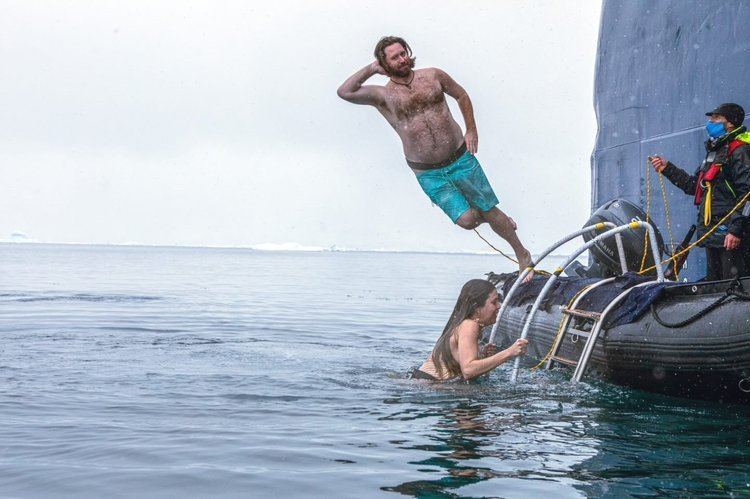
Reserved for only the bravest of explorers who wish to jump into the ice-cold waters of the Arctic! Clothing optional*
Copenhagen pre lube: 5 July 2027Ferry Copenhagen to Oslo: 6 July 2027Oslo pre lube: 8 July 2027Rego info will be posted by Liquor Up & Occupied. Details
Kayaking must be pre-registered at the time of booking. Guests are added to the list in the order they make their first payment.
Kayaking depends on weather, sea conditions and how many people sign up, so earlier bookings have a higher chance of going out. Groups of 10, twice a day: up to 20 kayakers on a good day, with 6 to 8 outings expected. In excellent weather, everyone who wants to kayak gets at least one outing.
If an activity is cancelled or can't be offered because of weather, you won't be charged.
All guests sign a waiver for kayaking and the polar plunge. The kayak masters and guides have the final say on whether a guest is physically able to take part.
Credit card bookings carry a 3.2% administrative fee (waived if booked by Dec 31st).
Bank transfer, Wise and Zelle payments have no fees.
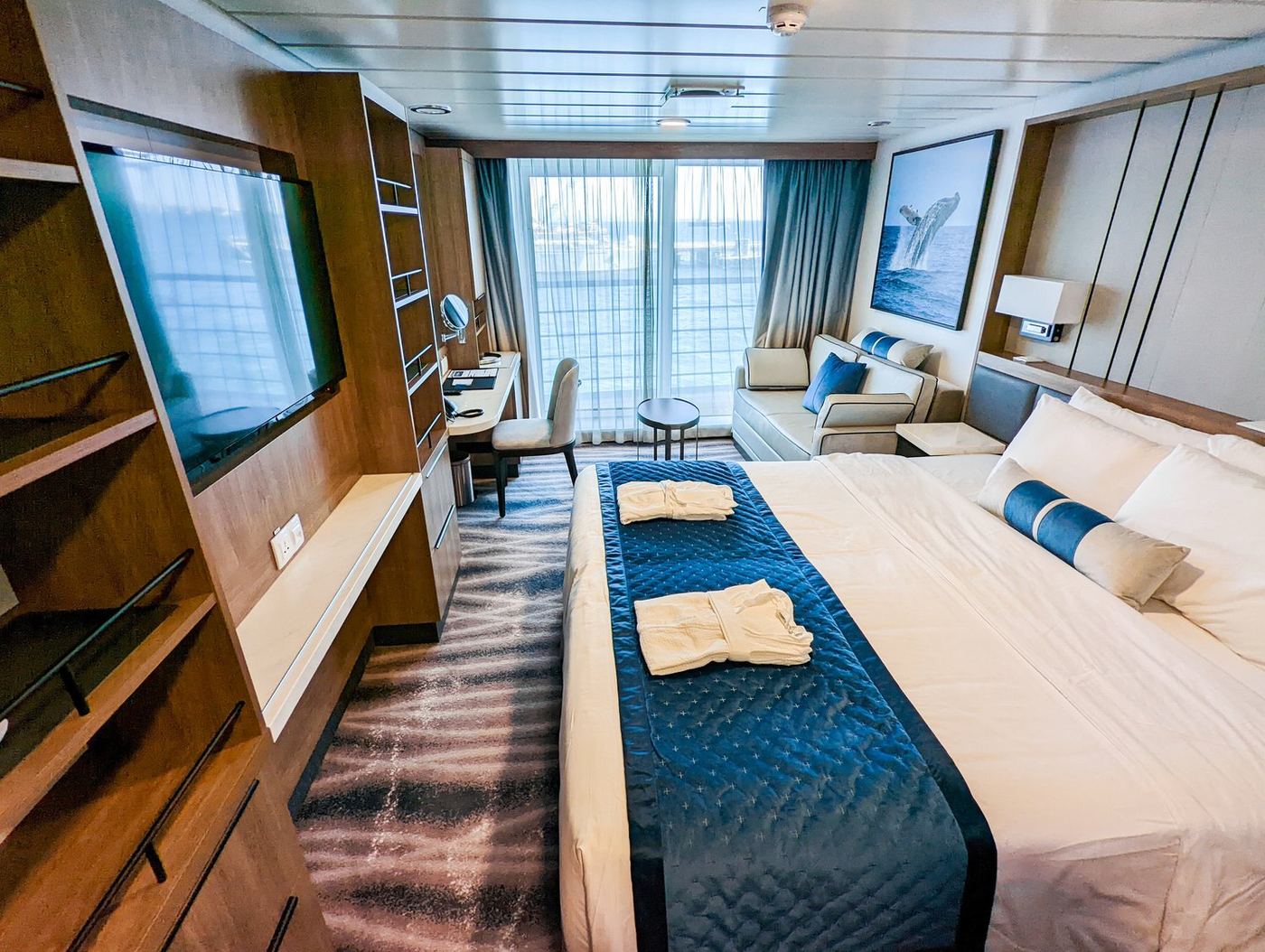 2 cabins left
A spacious balcony cabin on deck 4 and deck 6, with a large walk-out private balcony. Beds can be configured as two twins or a matrimonial bed. Ensuite.
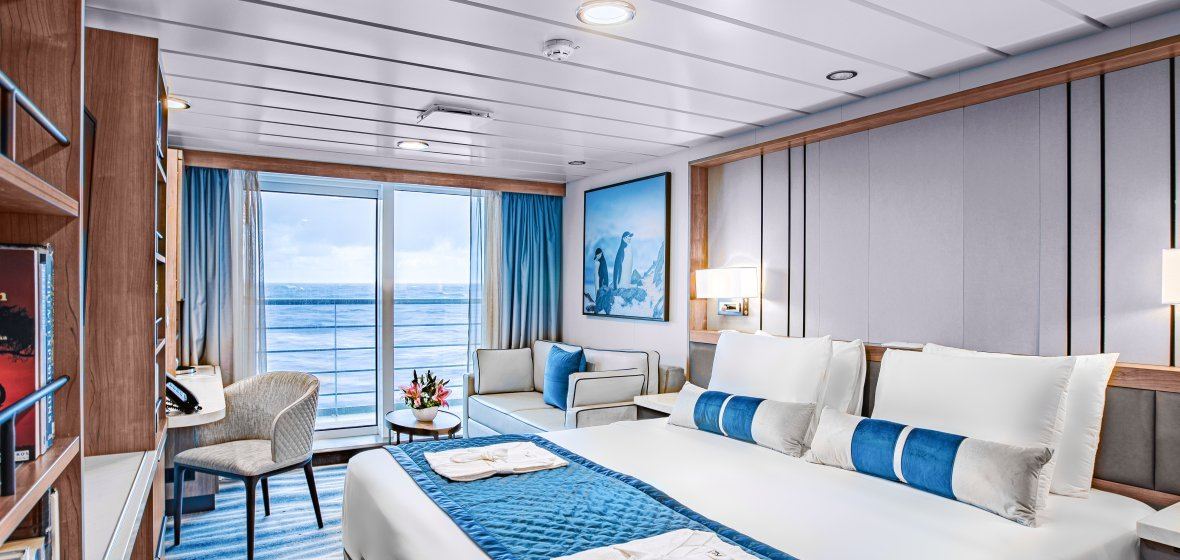
The same comfort, space and luxury as the C Twin, with the sofa bed pulled out for a third guest. Great for friends, families and solo travellers. Main beds can be configured as two twins or a matrimonial bed.
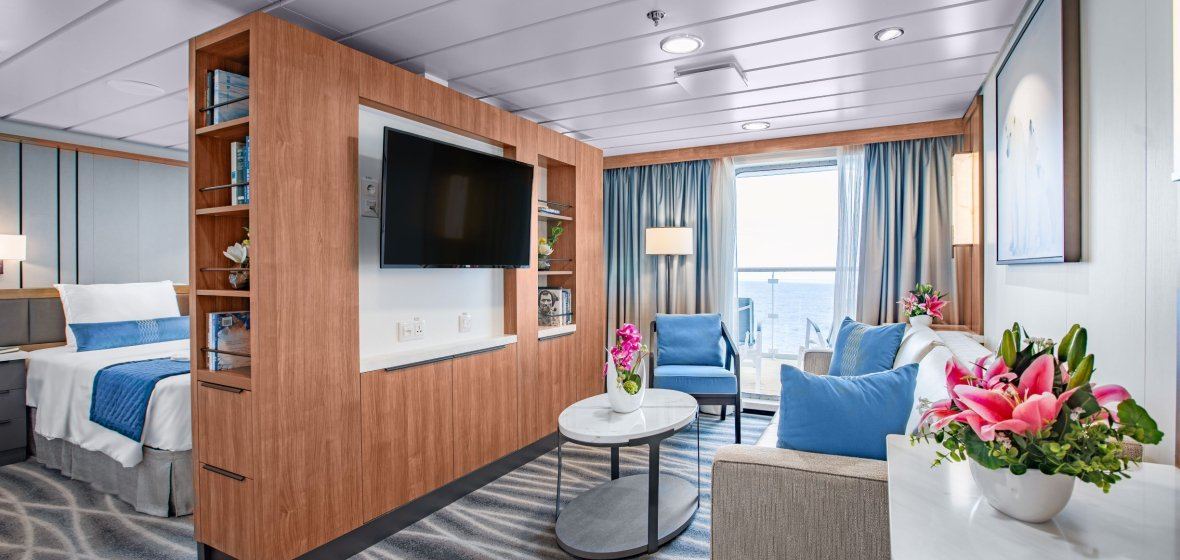
A two-room living configuration using a large bookshelf divider. The bedroom and living room each have a TV, and the couch pulls out into a sofa bed. Sleeps 2 or 3. VIP service included: unlimited specialty restaurant access, stocked minibar, wine and fruit on arrival, free laundry.
 Sold out
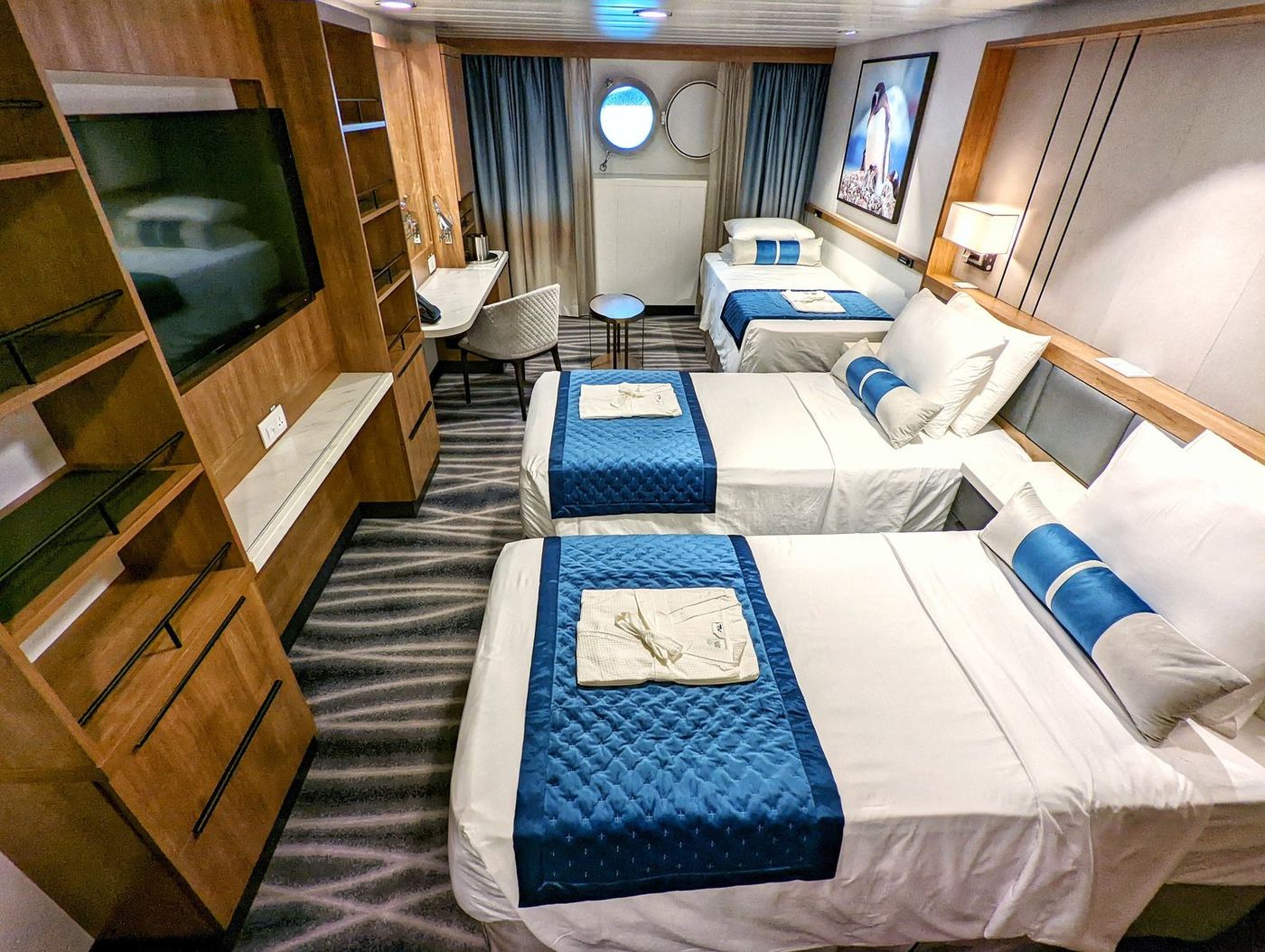
Large cabins on deck 3 with three lower twin beds, or a queen bed plus a single. Great for a group of friends, solo travellers and families. Ensuite.
 Sold out · waitlist
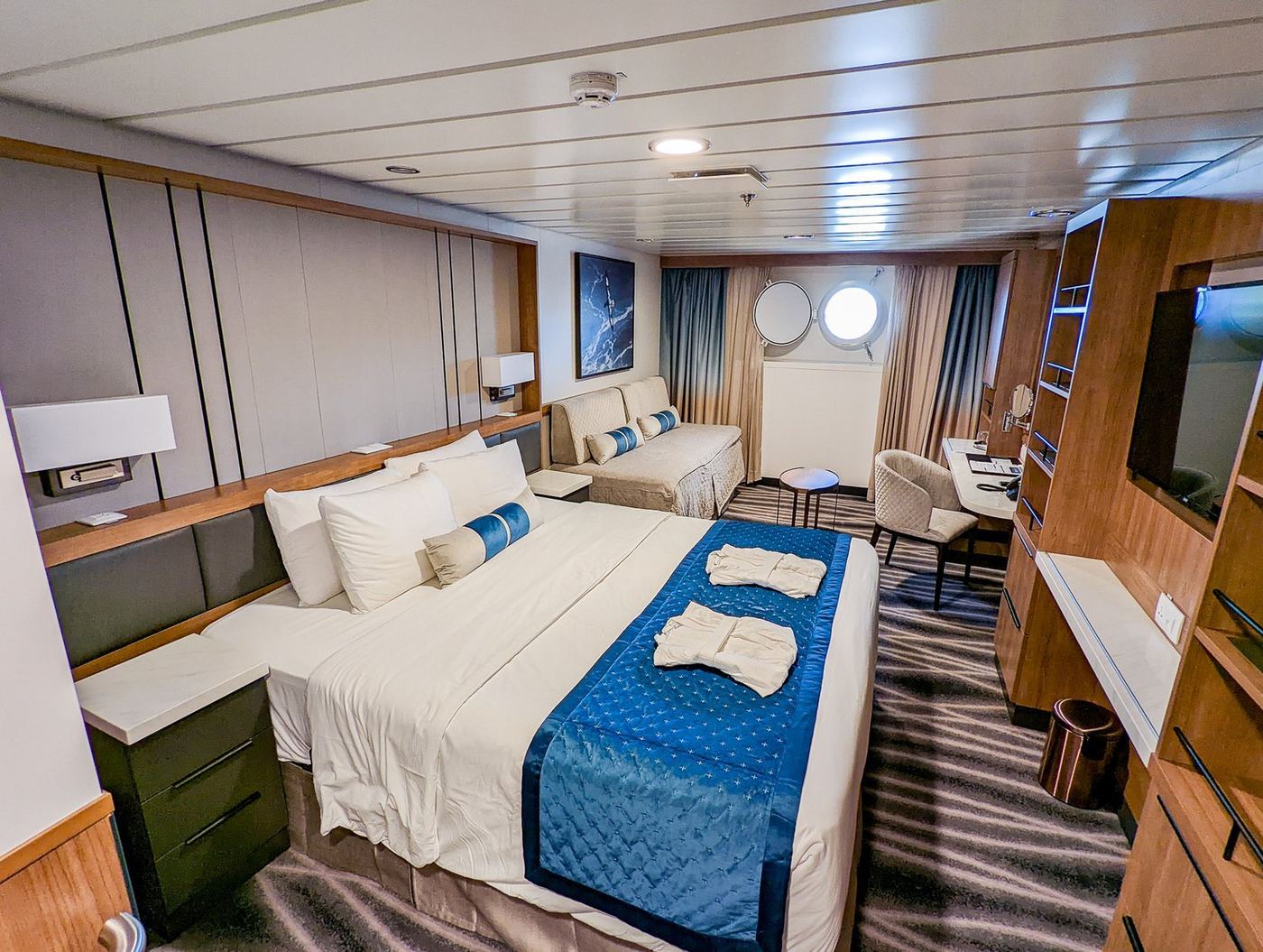
Twin portholes on deck 3 with a large sitting area and a round porthole. Configurable as two twin beds or one matrimonial bed. Ensuite.
 Sold out
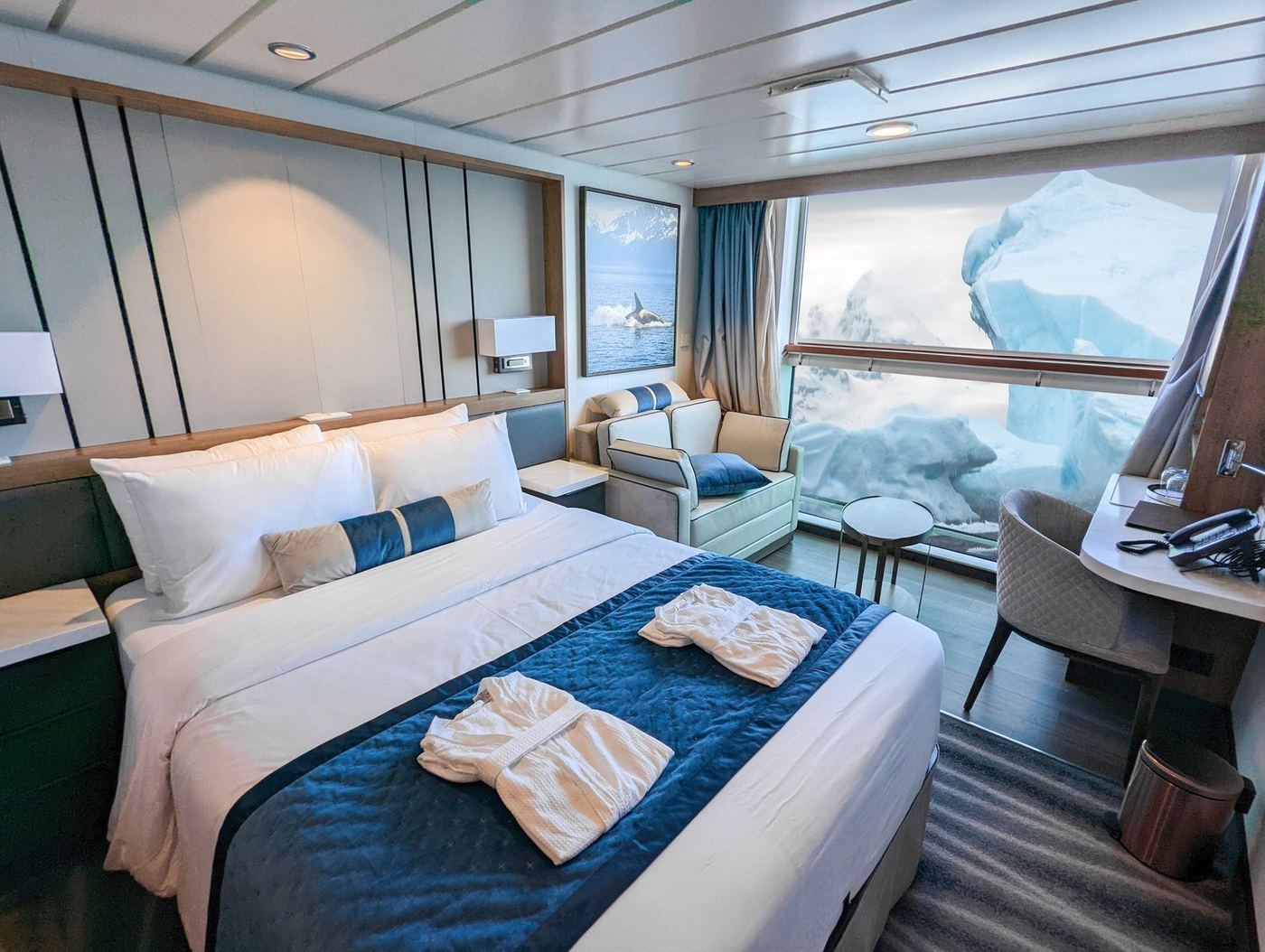
A double bed with the option of a full-size sofa bed, on deck 7. A floor-to-ceiling, wall-to-wall window whose top half slides down completely. Ensuite.
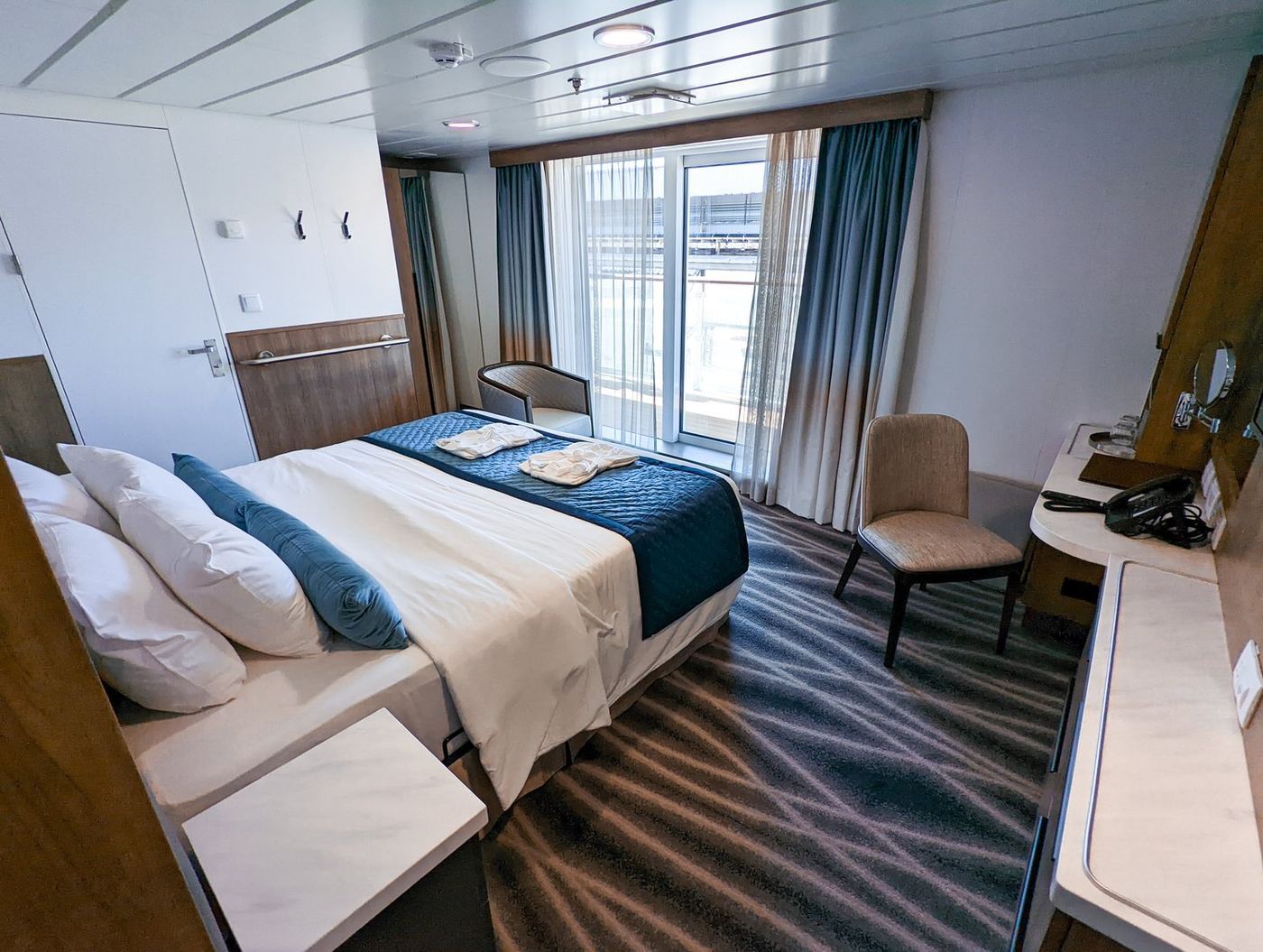 Sold out
More space than the C Balcony and a larger private balcony, located midship for a smoother ride. Two twin beds or a queen. VIP service included: unlimited specialty restaurant access, stocked minibar, wine and fruit on arrival, free laundry.
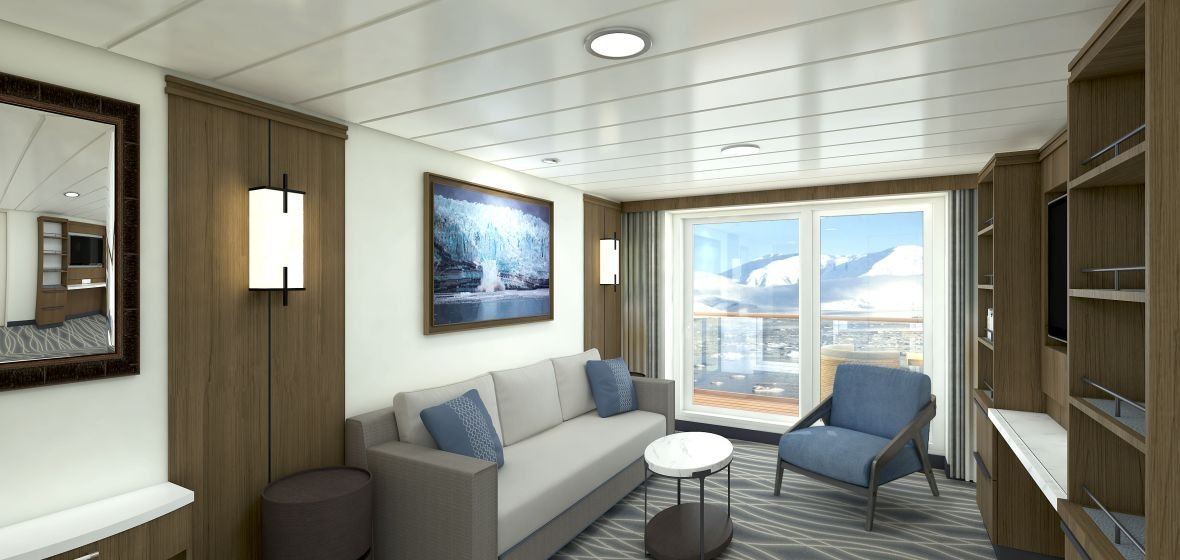
The second largest stateroom on the Ocean Albatros: a 2-bedroom suite with a double (or twin) bed, a sofa bed, table and chair, balcony and spacious bathroom, on deck 4. VIP service included.
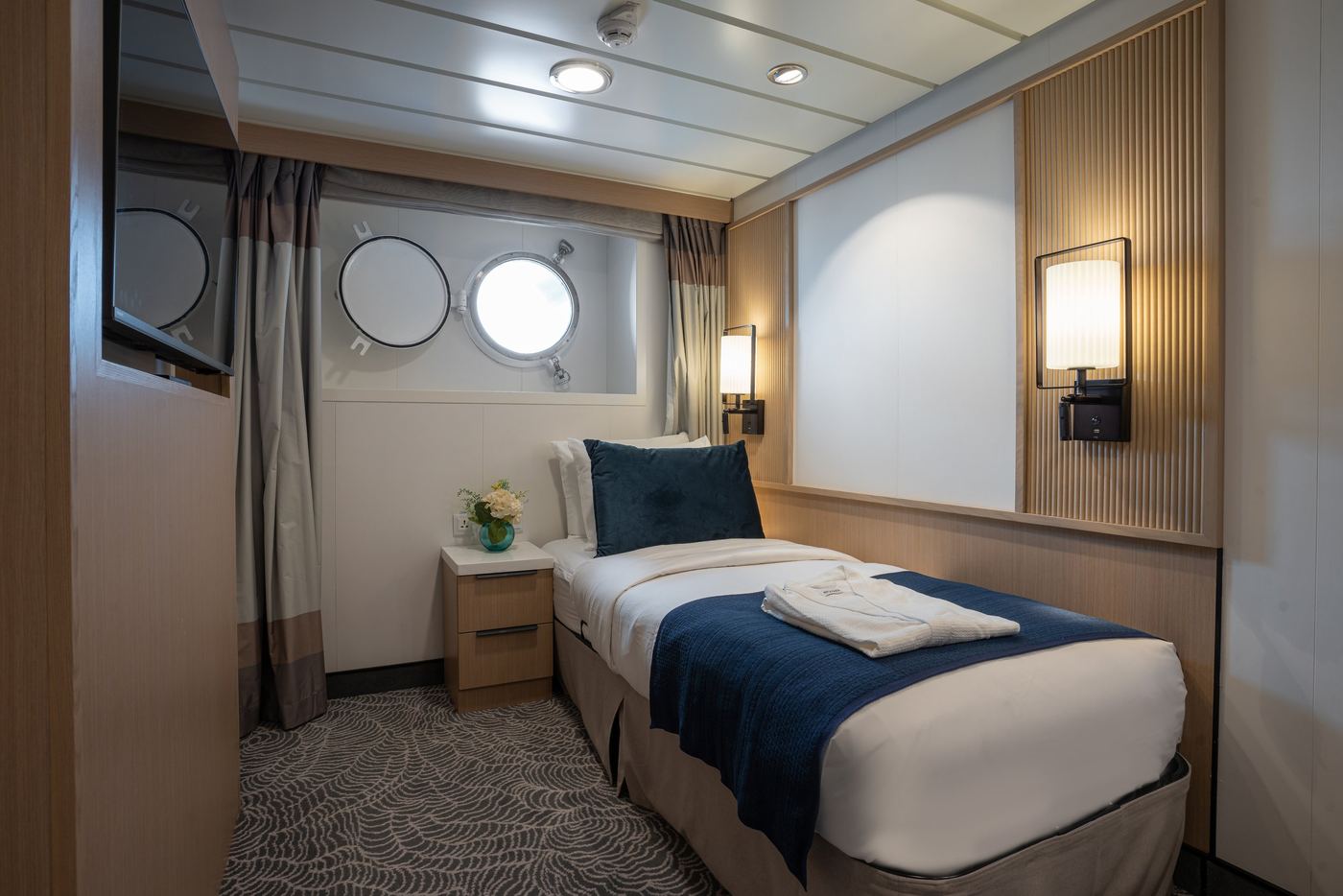 Sold out
The standard single stateroom on deck 3, conveniently close to the mudroom for quick access to the Zodiacs.
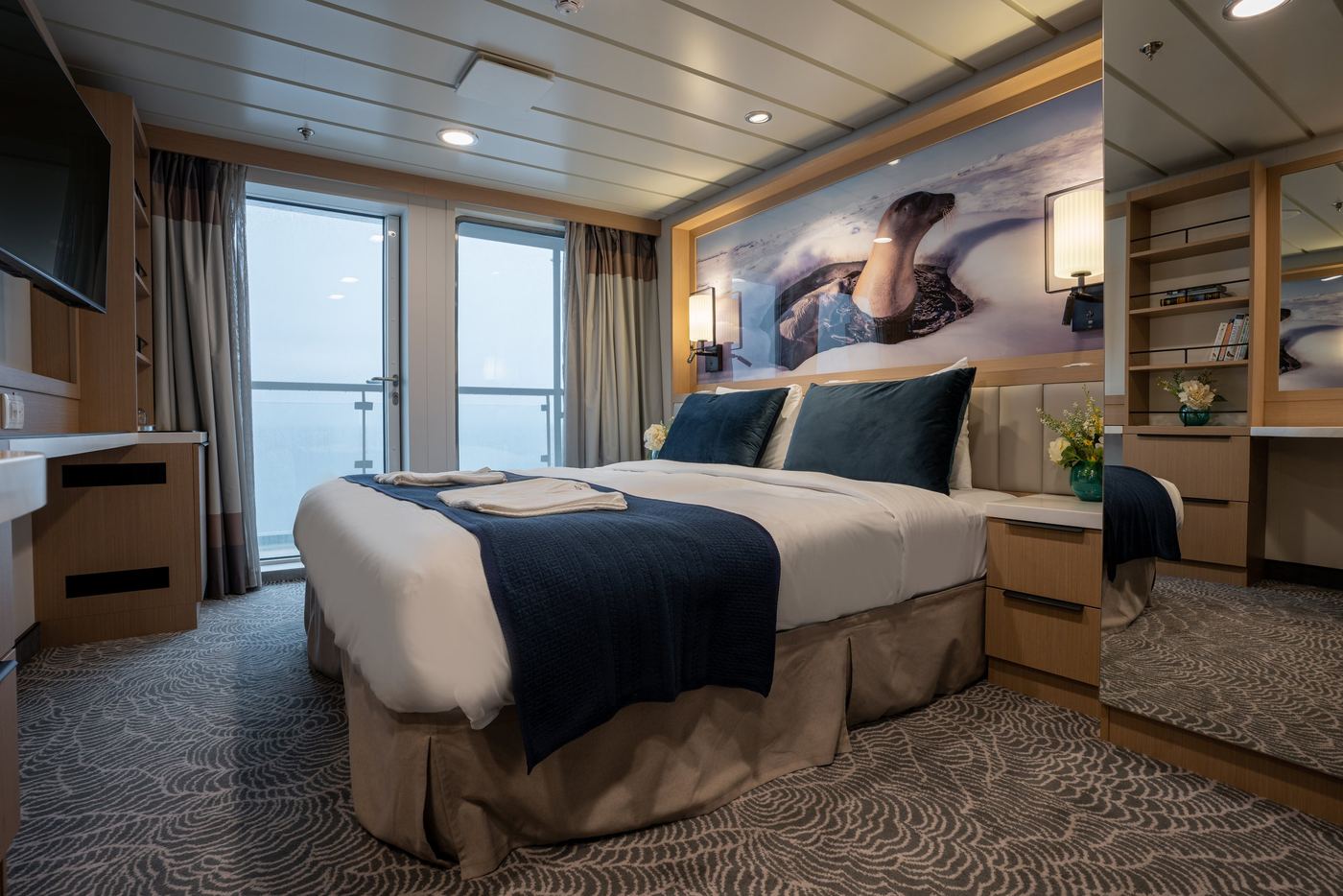 Waitlist
On decks 4 and 6 with a private balcony and a double/queen bed. Priced for single occupancy. Ensuite.
Cabins may vary and may not be exactly as pictured. Please check the deck plan and contact us for more information.
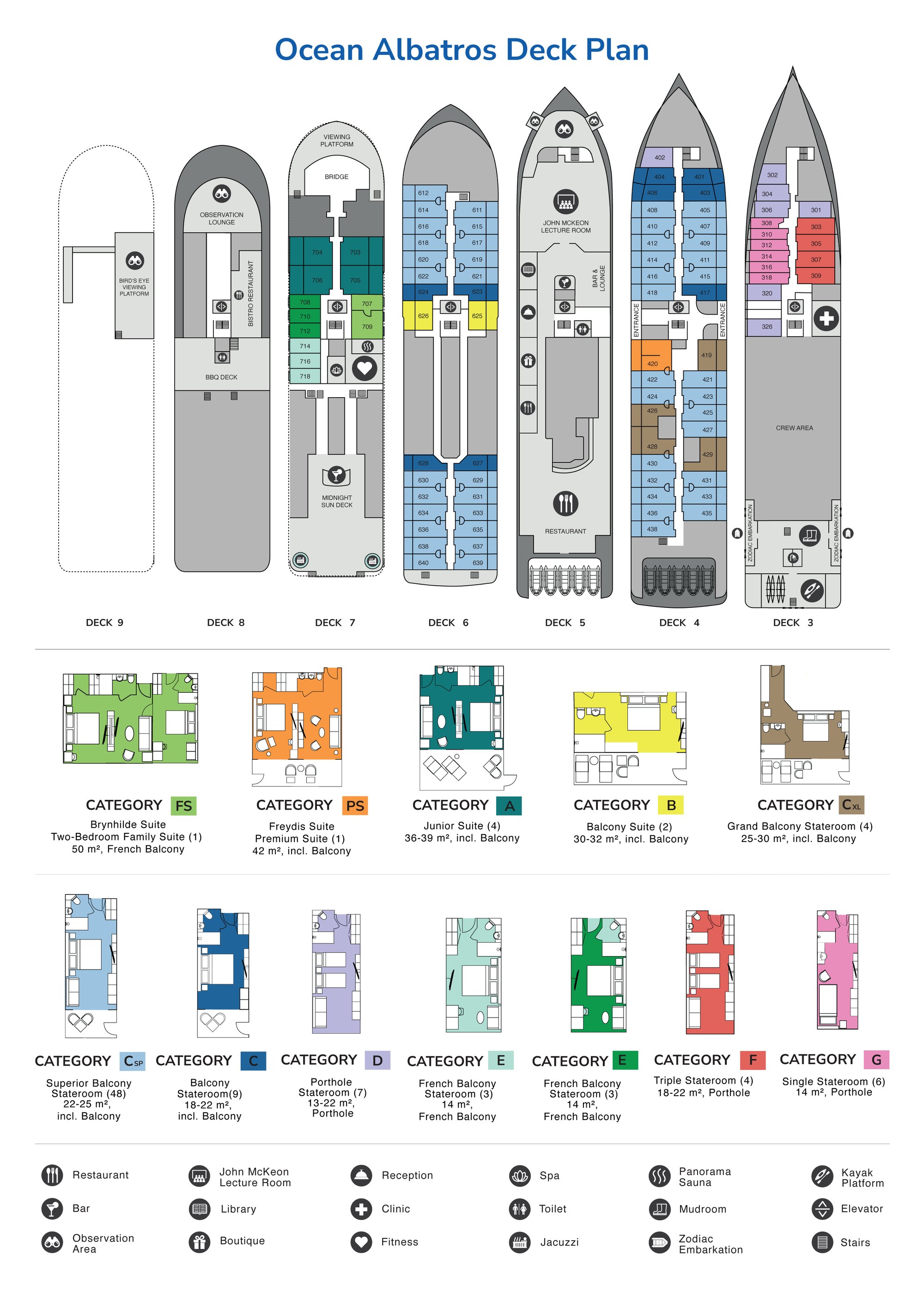
Tap the deck plan to open it full size.
Retail pricing is the total a guest would pay without any of the free inclusions: the retail cost of kayaking, the all-inclusive drink package, the charter flight and each berth as advertised by Albatros Expeditions, plus other costs of chartering a ship. All of these are included in your discounted booking price.
This trip is offered as a full private charter.
Antarctica Travel Group is a registered corporation in California and abides by the terms and conditions of Albatros Expeditions, offering no additional guarantees or terms beyond Albatros Expeditions' published T&C unless explicitly stated.
The Ocean Albatros joined the Albatros Expeditions fleet in June 2023 and sails to a wide range of destinations, from Antarctica to the Arctic and many in between.
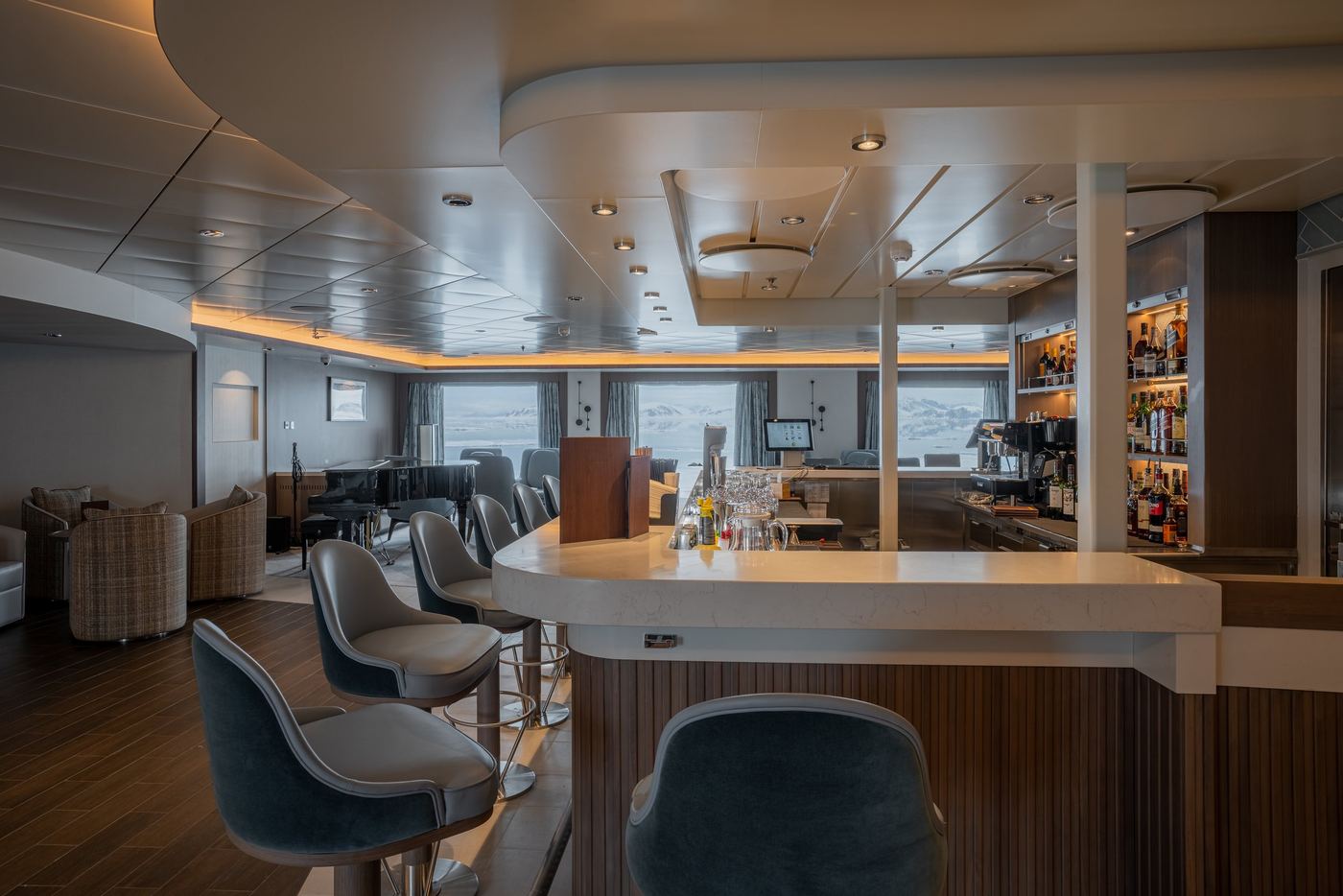
With 94 comfortable staterooms and suites, all with unobstructed sea views and most with their own balcony, she has become one of the most popular expedition vessels in the world. On board: two restaurants, a wellness area, the Albatros Nordic Bar, open-deck dining, a modern lecture lounge, a unique panorama sauna and dedicated solo cabins with no single supplement.
Her carbon footprint is more than 50% lower than traditional expedition vessels, and she follows the Green Initiative Program for both comfort and sustainability.
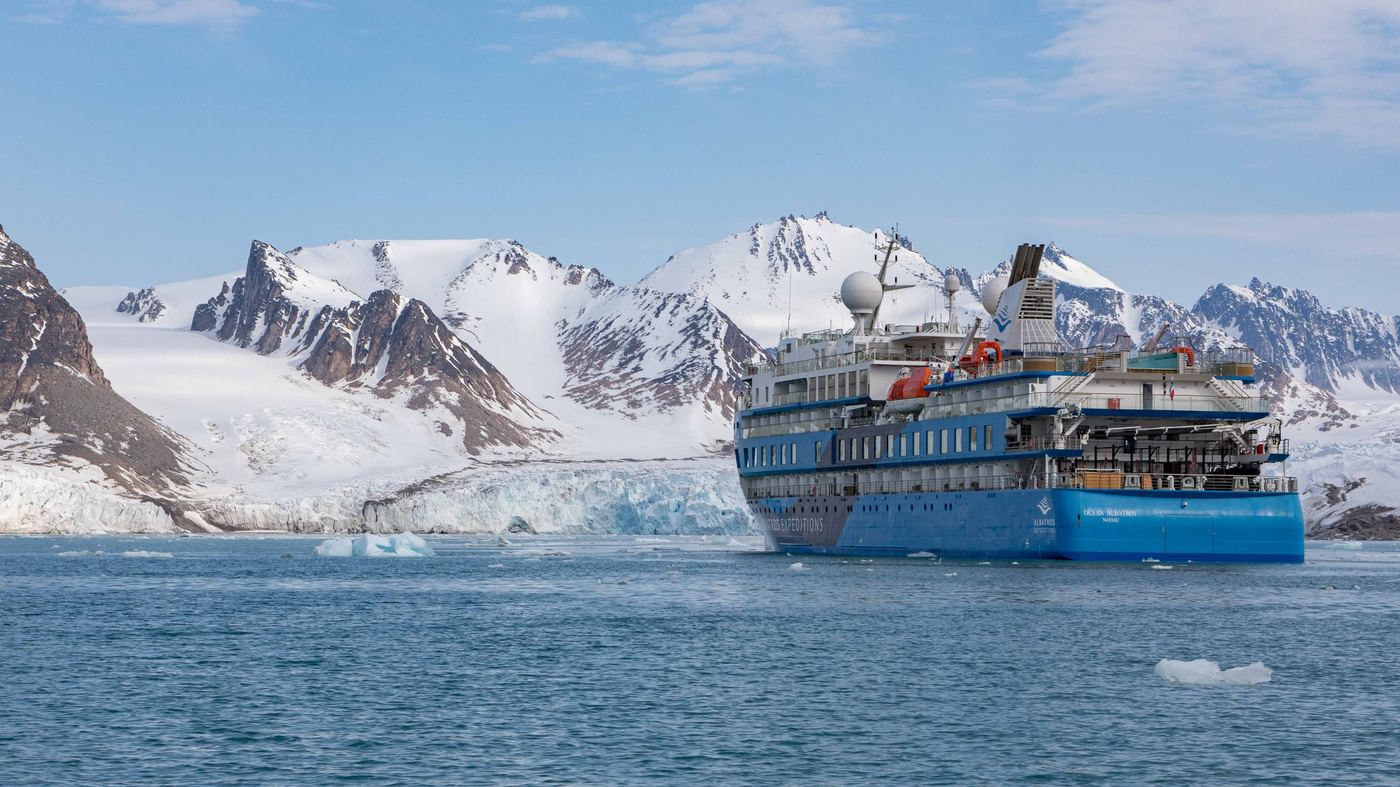
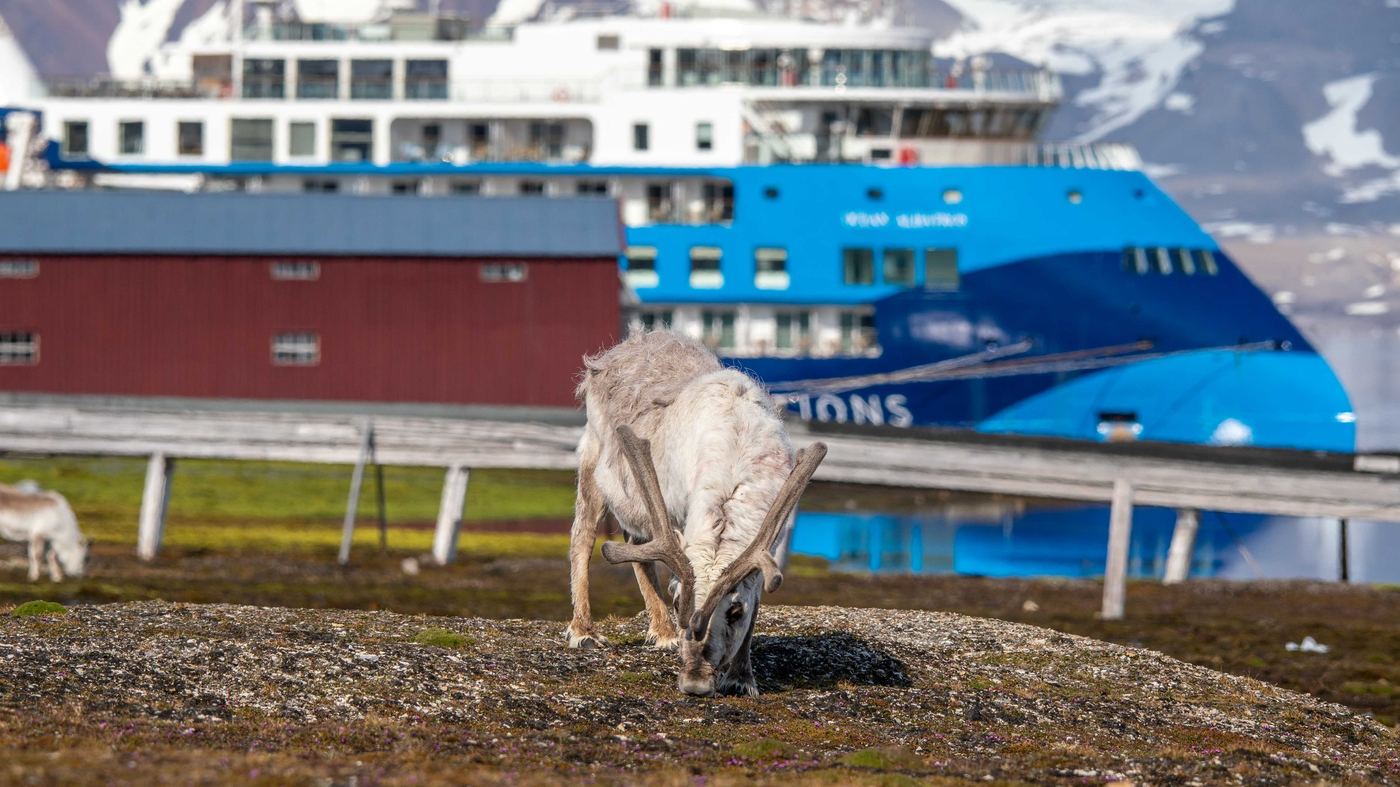
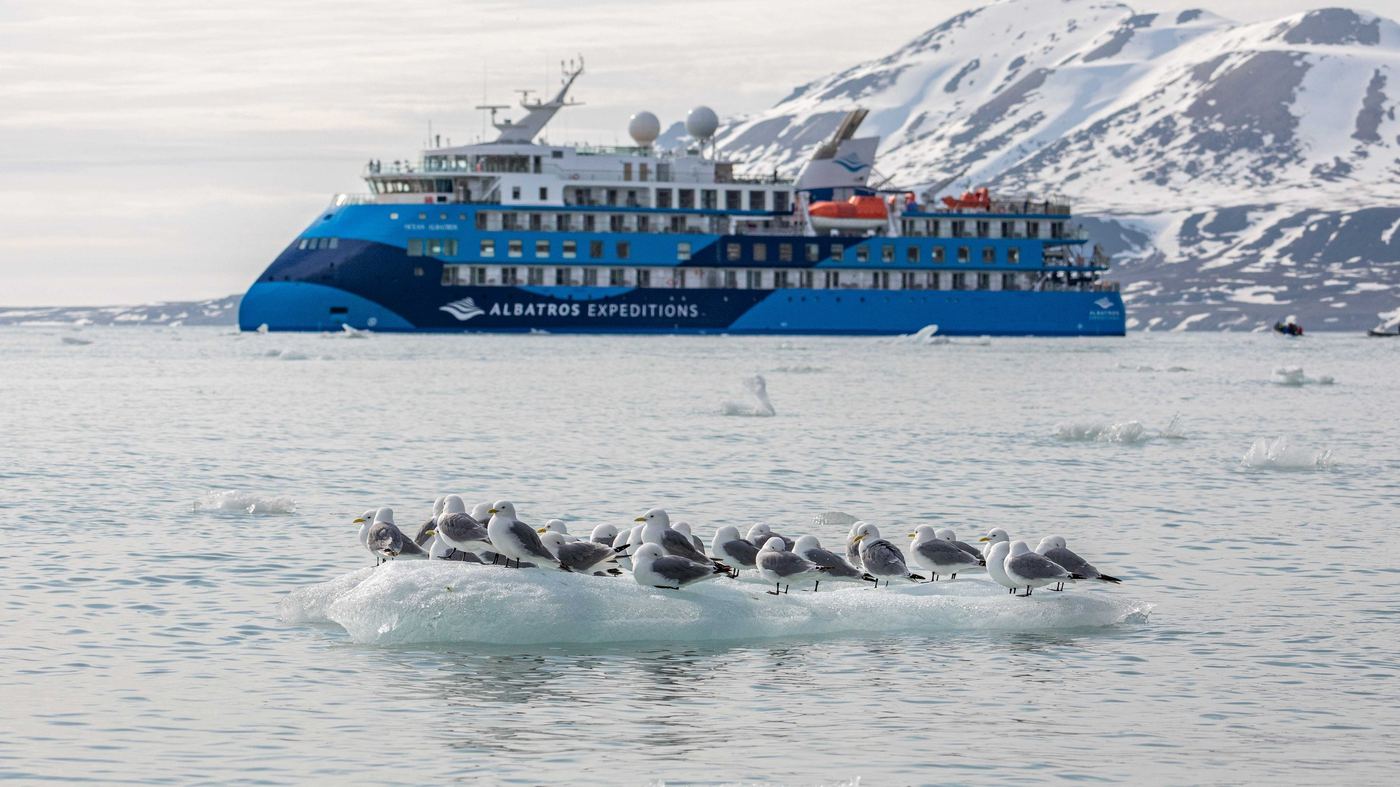
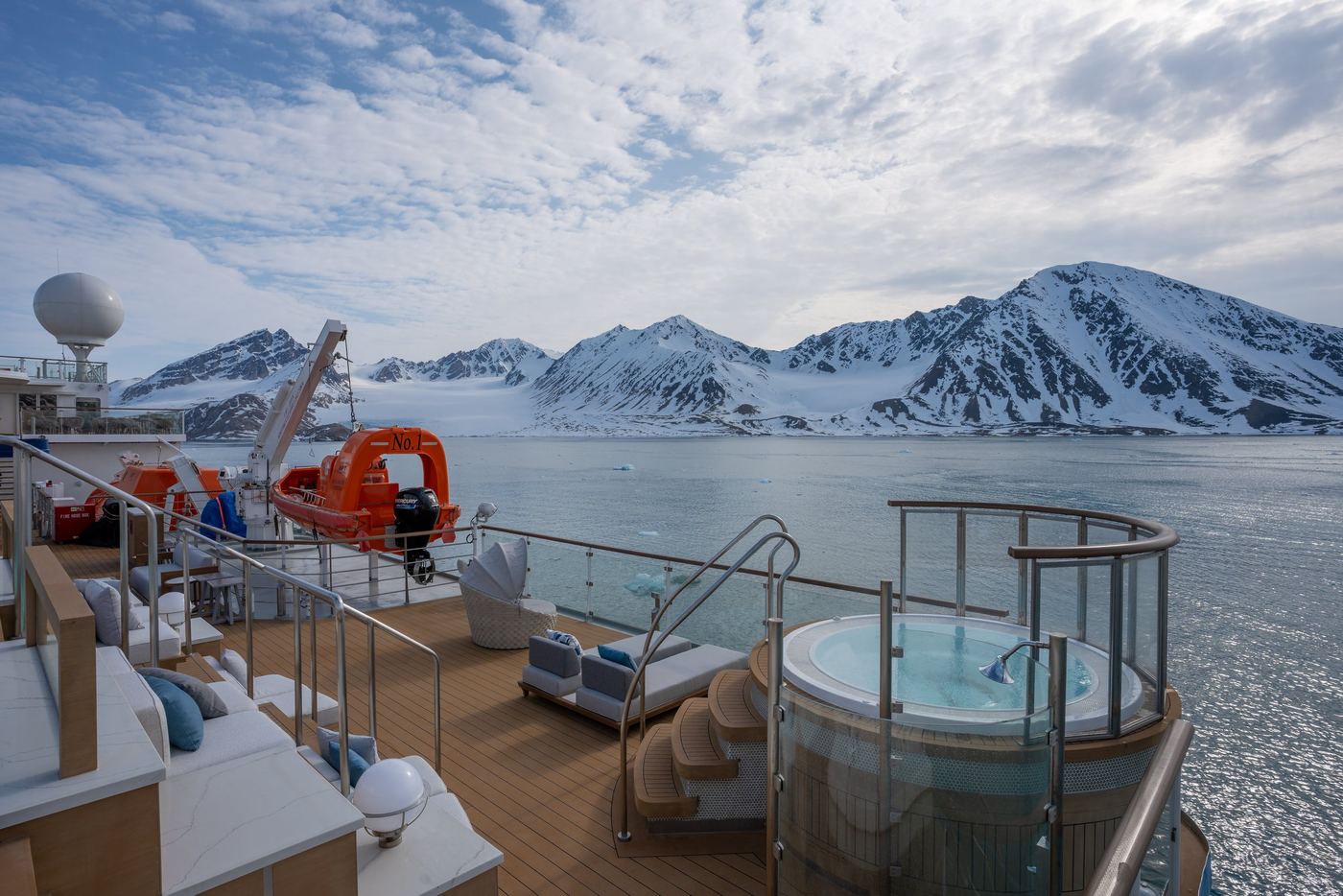
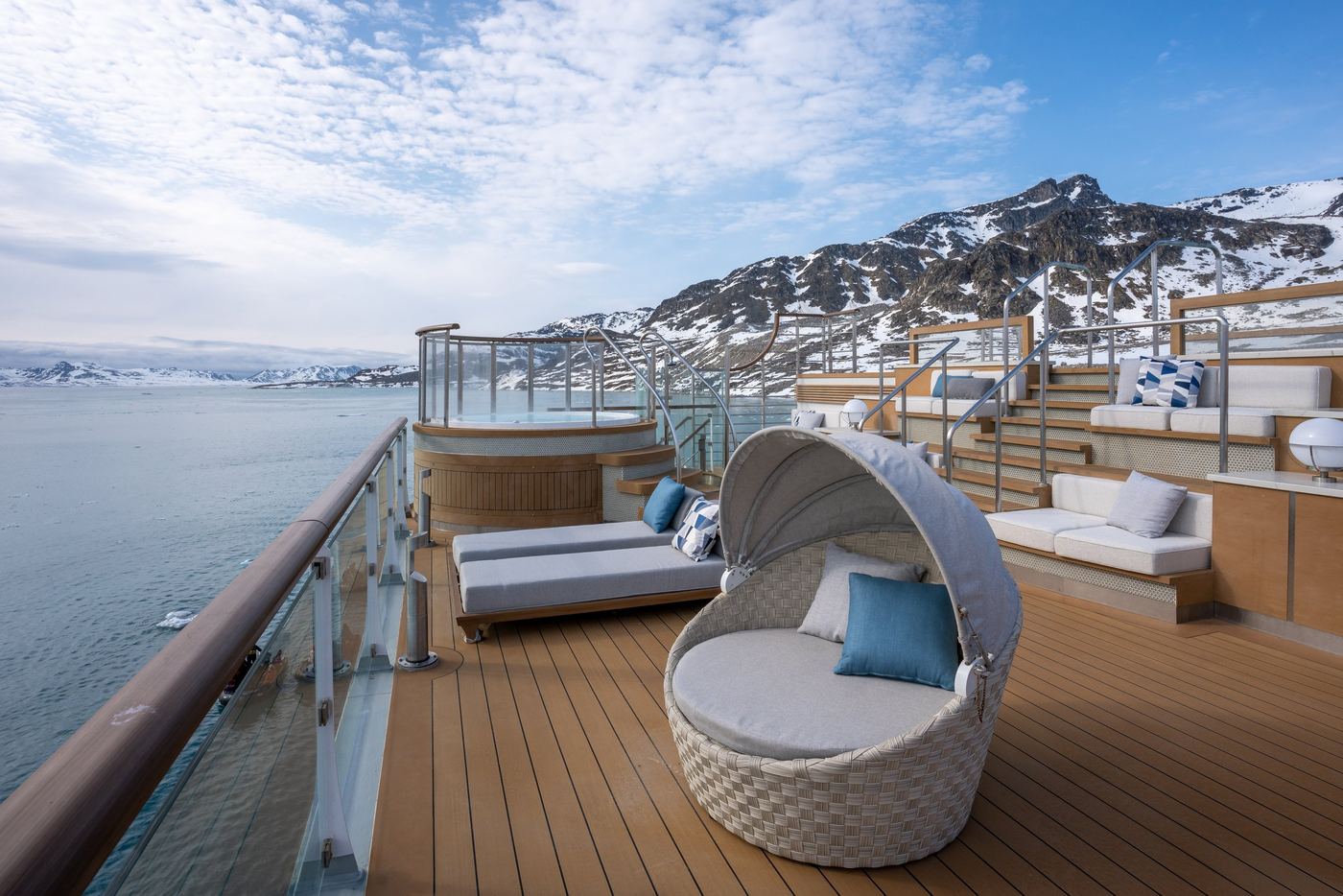
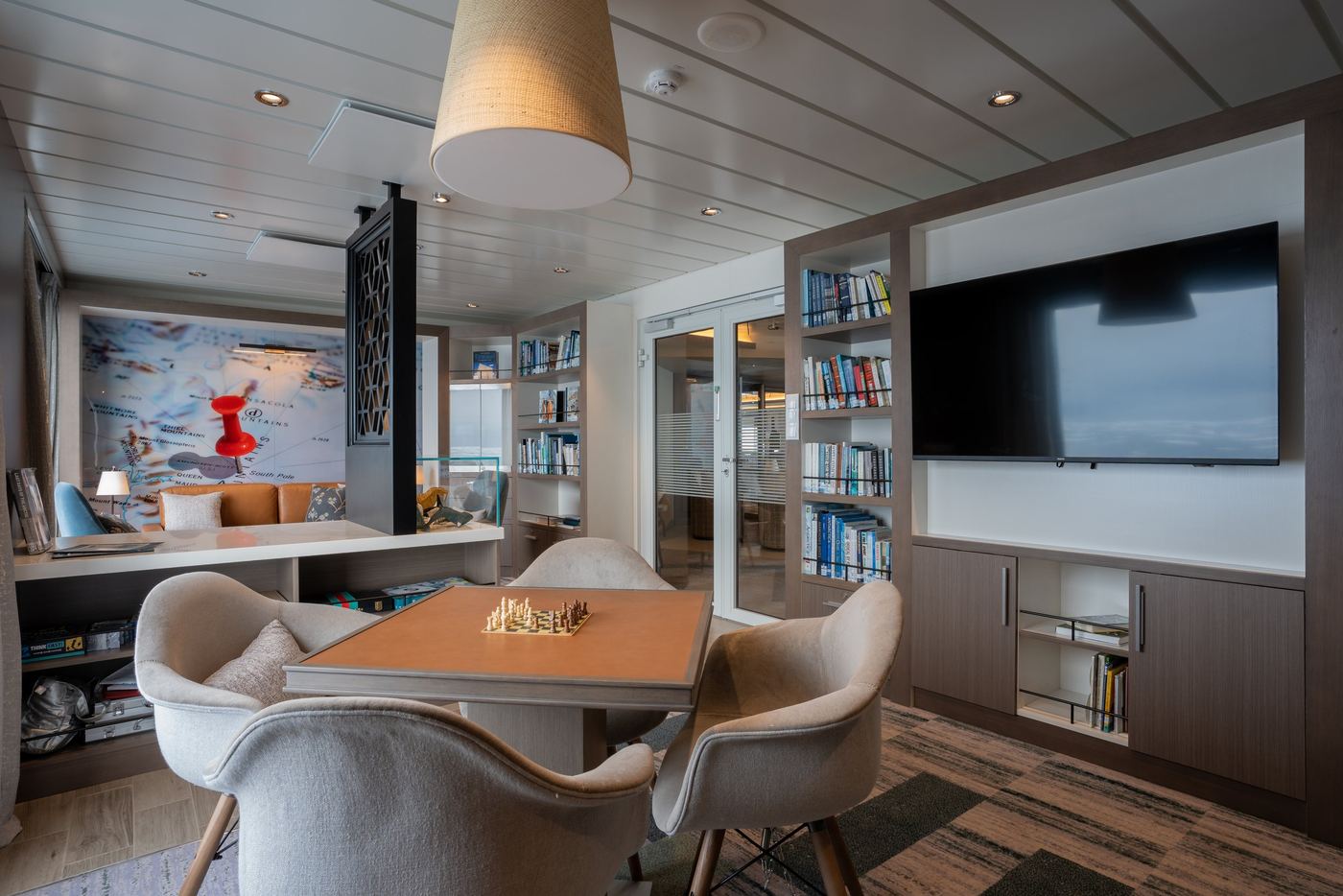
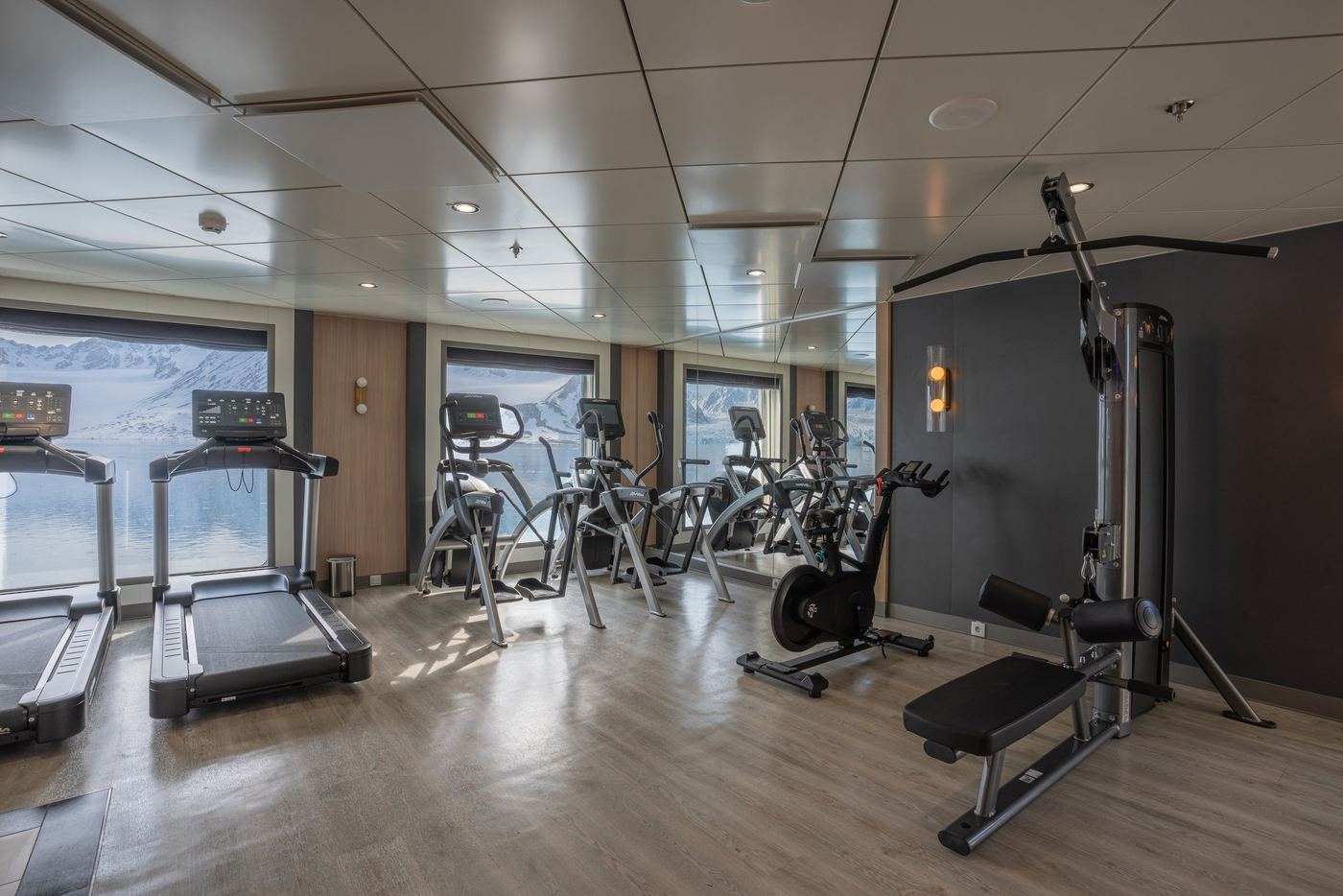
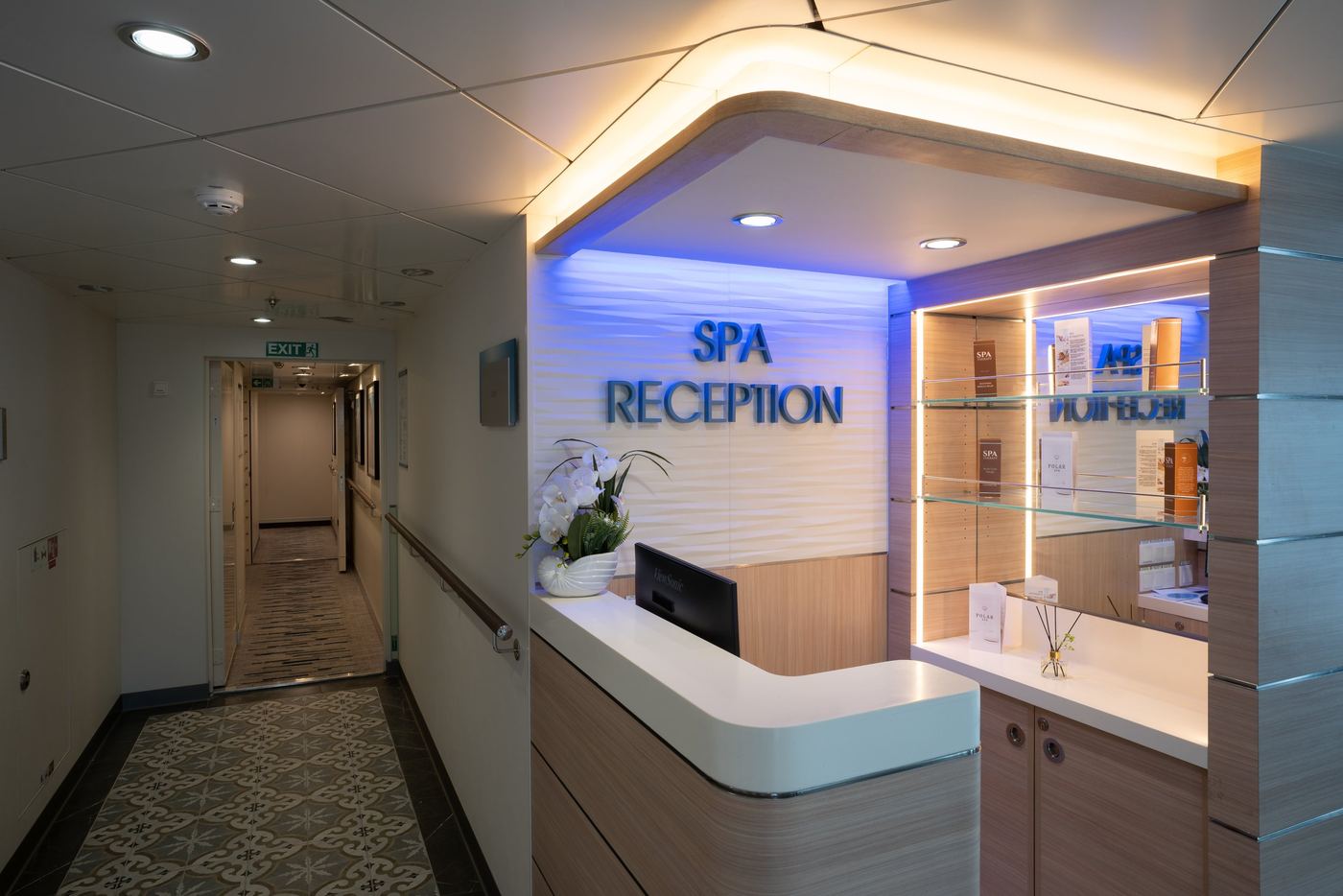
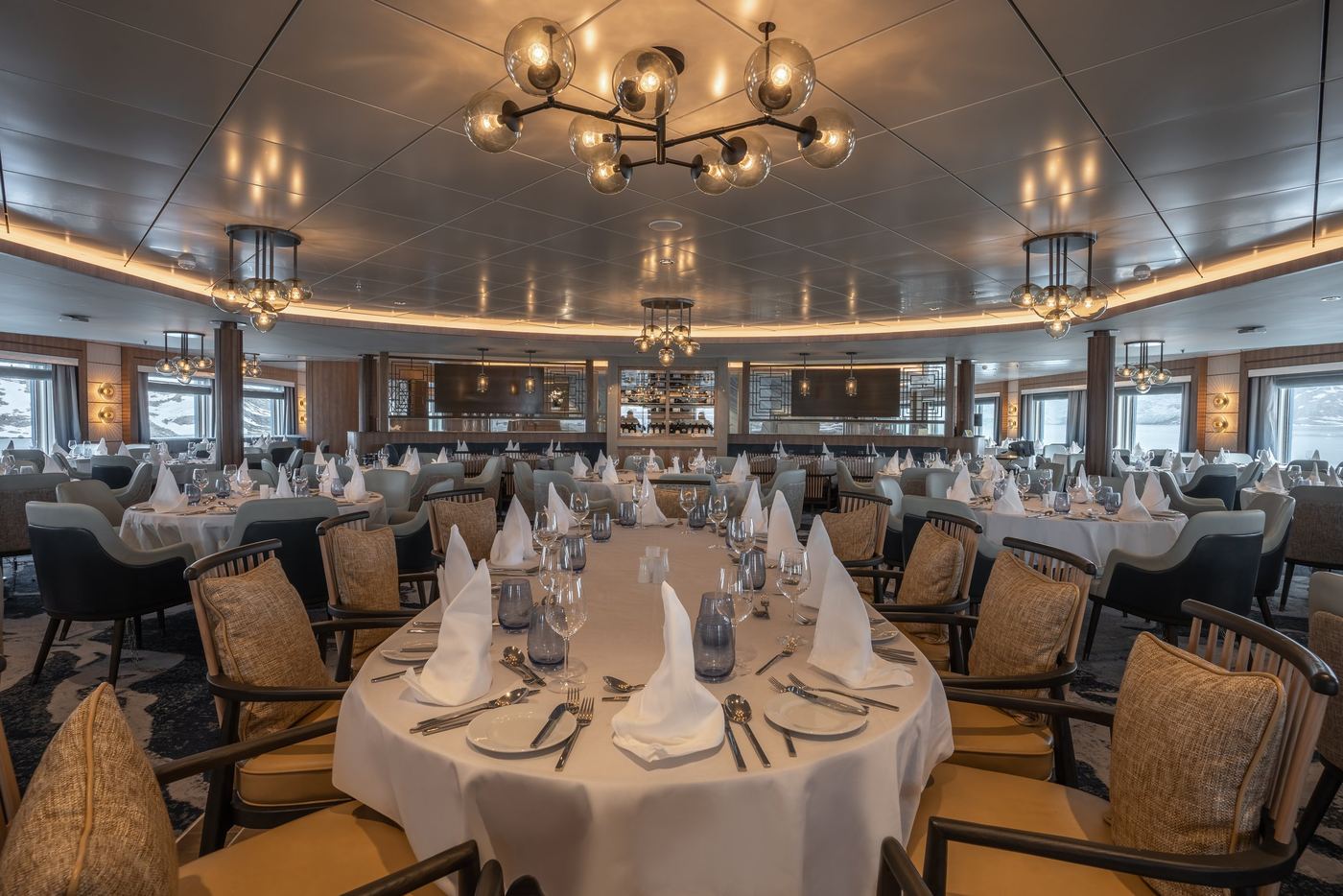
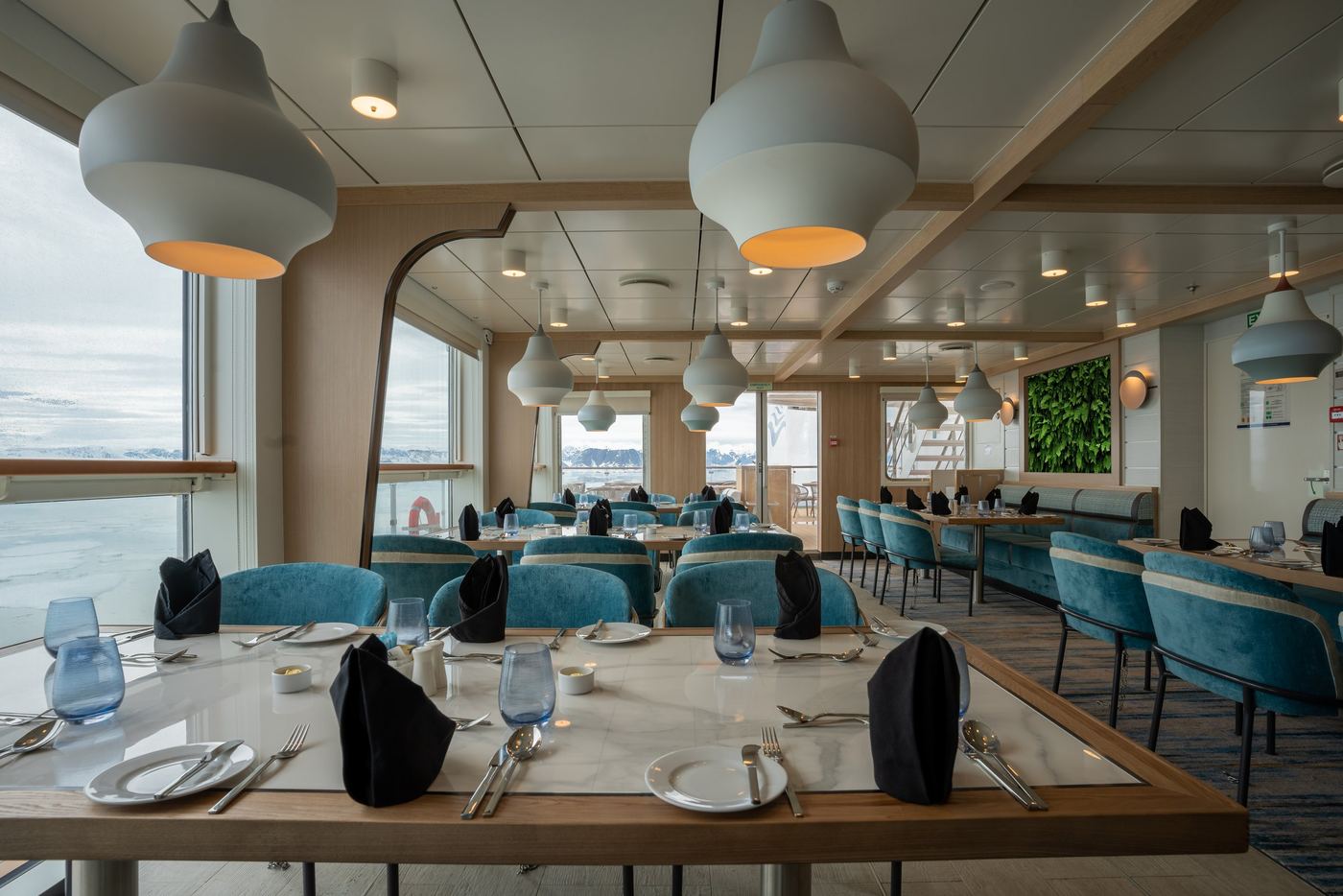
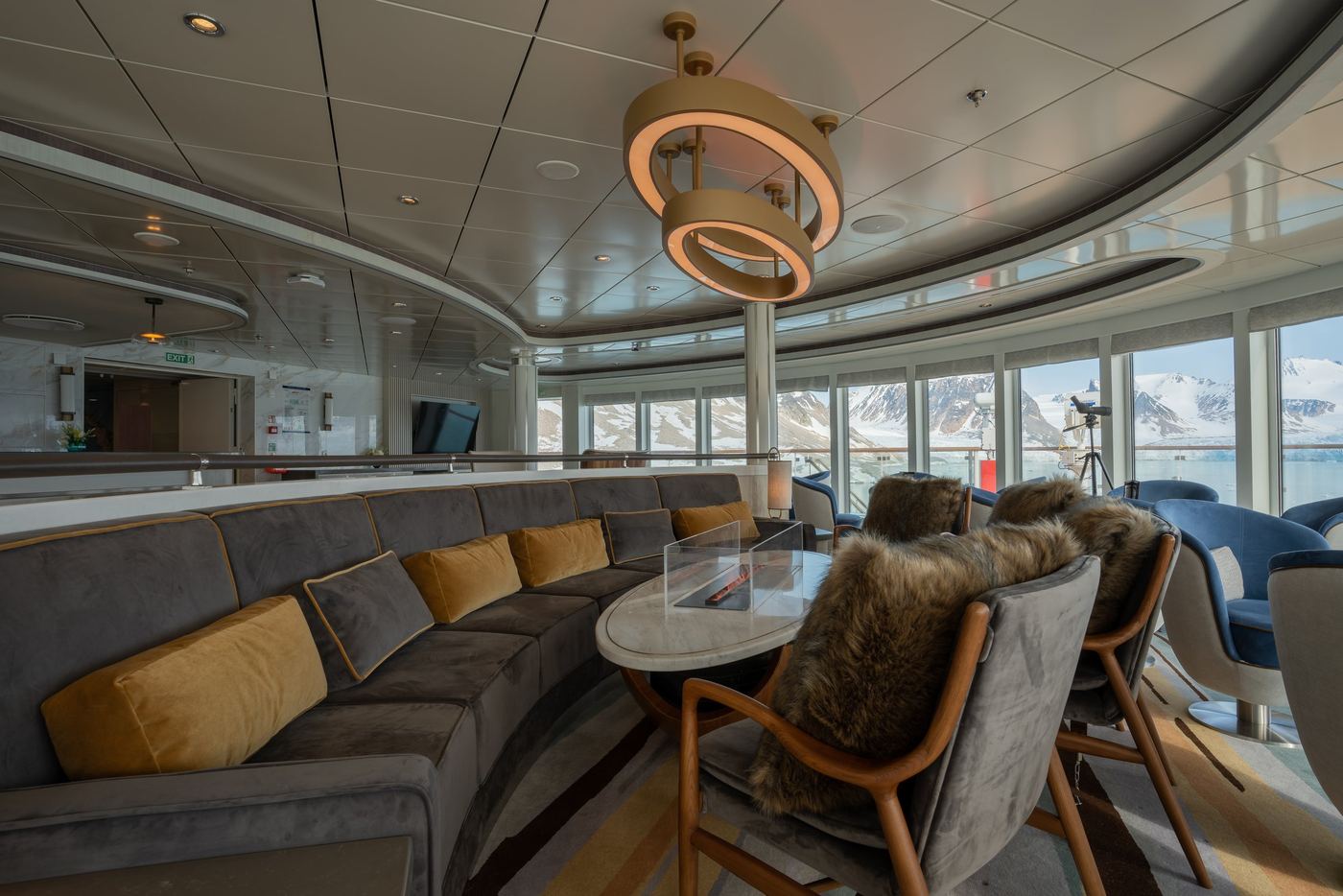
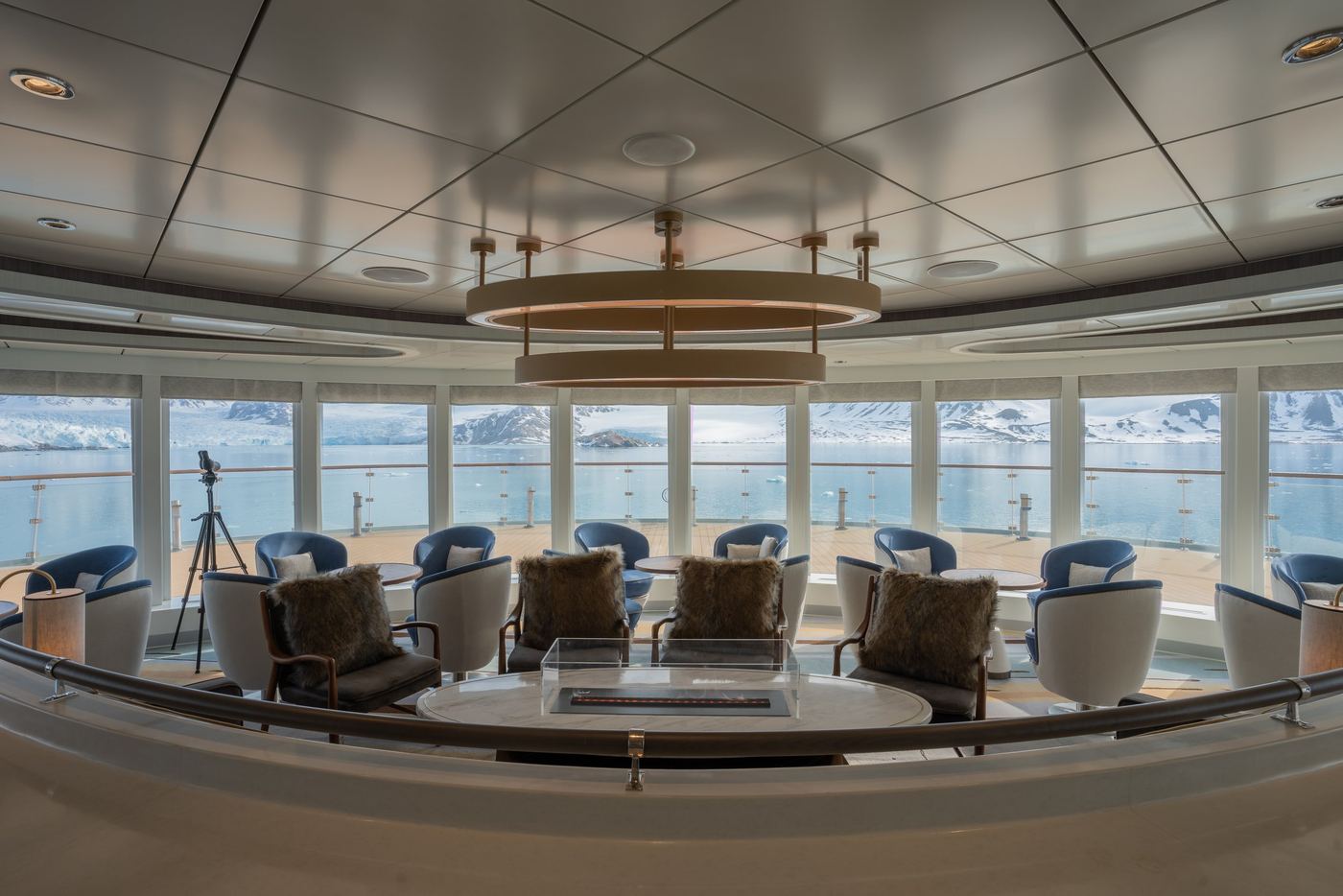
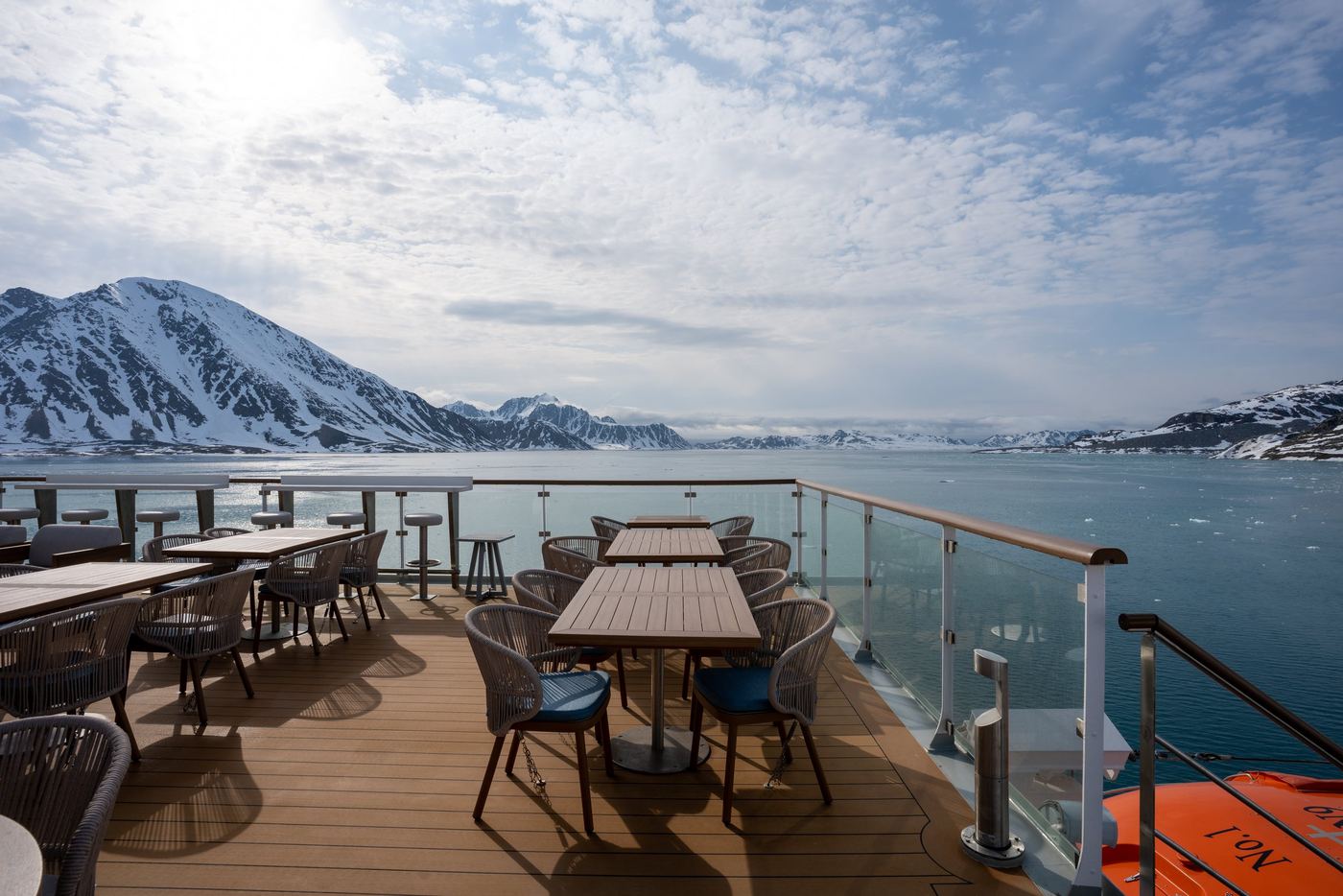
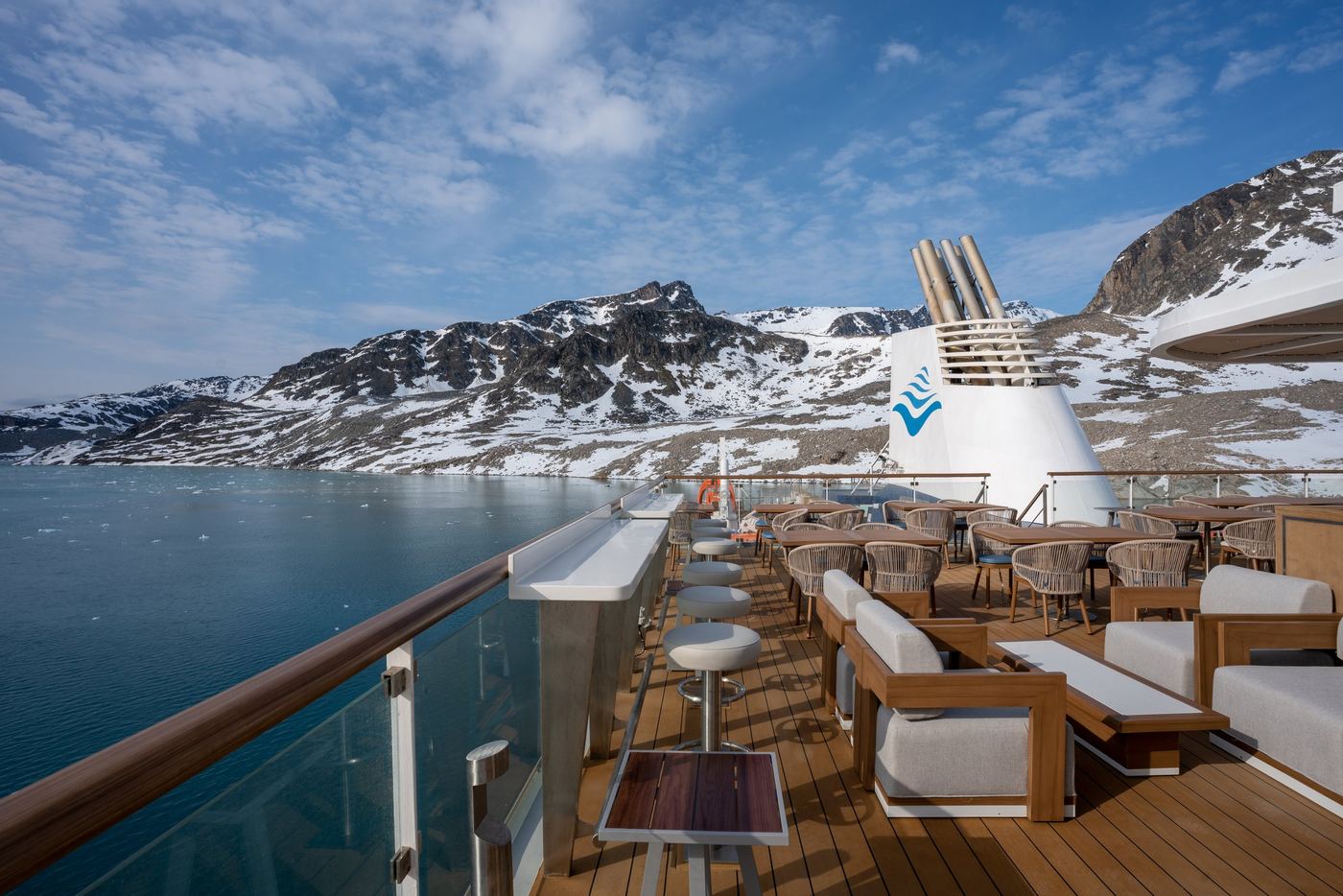
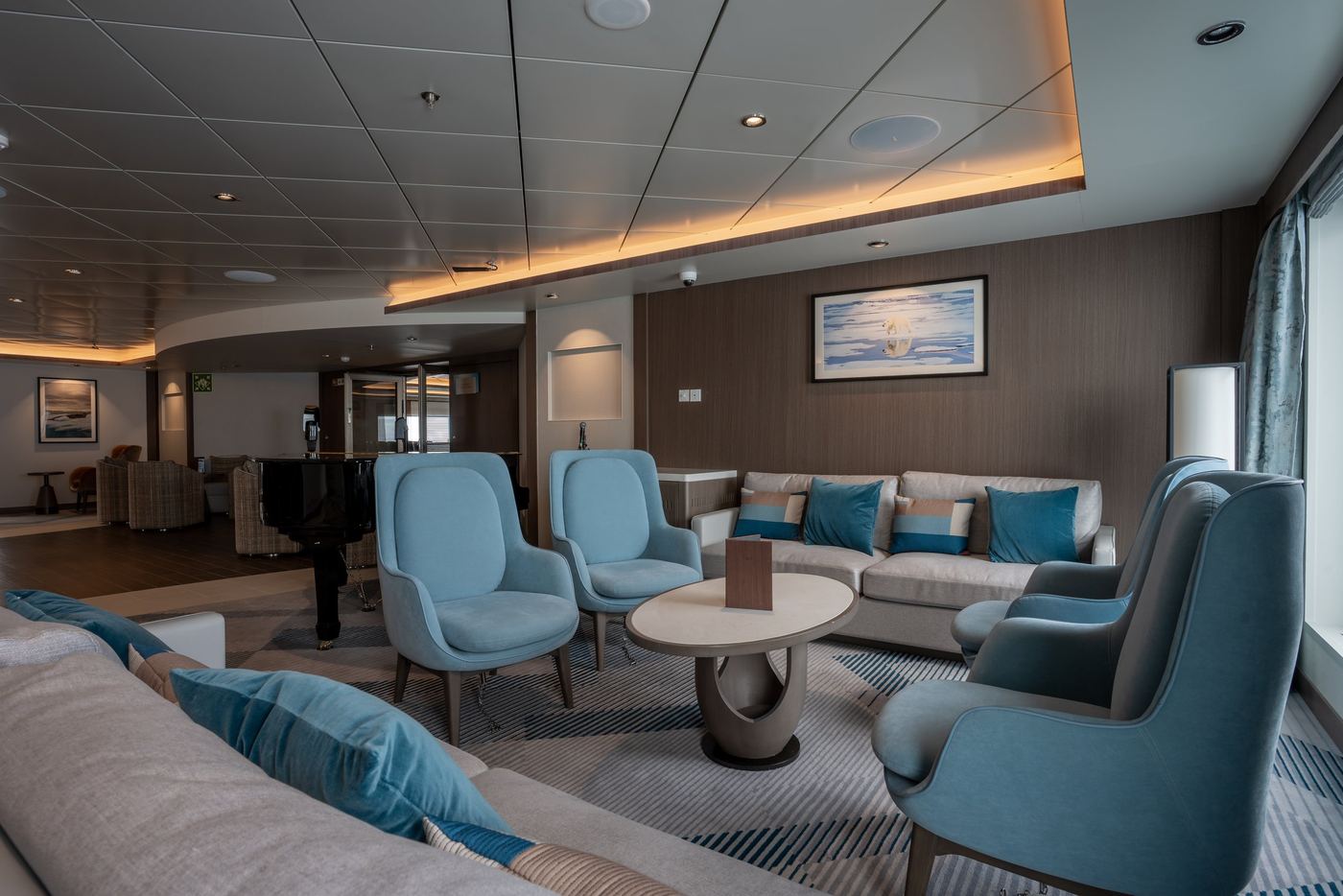
The bridge is the control centre for all nautical and technical processes, so it may not always be open to guests. Conditions permitting, we're happy to welcome you for a visit, accompanied by the master or the expedition leader.
Two jacuzzis on the upper outside deck (deck 7) offer spectacular views of the polar landscape. There is no lifeguard on duty, and the jacuzzis close when weather and wind make them unsafe. Check with the expedition staff on board for opening times.
Your stateroom is serviced daily, with turn-down service.
Landings and excursions use the Ocean Albatros fleet of 18 inflatable, motorised Zodiacs, the sturdiest and safest small watercraft available, with a low draft, great stability and minimal environmental impact. They let us land on remote shores, cruise along coastlines and get breathtakingly close to whales, seals, walruses, seabirds and more.
The expedition leader plans as many Zodiac excursions as conditions allow and makes the final call on every landing. All guests receive mandatory safety instruction, and life jackets must be worn. Bring waterproof bags for cameras and binoculars, as both hands must be free when boarding. Participation is fairly easy for able-bodied guests but can be more challenging for those with physical disabilities.
At embarkation you receive a personal cruise card, used on board for payment and identification. Purchases from the boutique, bar, internet, telephone, laundry and similar are charged to your shipboard account, which you activate with Visa, MasterCard or American Express and settle at the end of the voyage. There is no currency exchange on board.
It's customary to leave a gratuity for the crew at the end of the voyage, divided among all crew. The recommended amount is about USD 13.50 per person per day. Gratuities are voluntary and are charged to your shipboard account.
Casual. Dressing for the weather matters more: comfortable, breathable, waterproof and windproof clothing, gloves, thermal underwear and sturdy footwear. For the captain's and farewell cocktails, smart casual is recommended.
The polar regions are among the world's most pristine environments, and minimising our CO2 emissions is a top priority. All waste stays on board until it can be disposed of ashore. Leave nothing but footprints, take nothing but memories.
We'll be in a very remote region. Where available, internet access is offered for an extra charge, and mobile reception may be possible in places along the route. Switch off data roaming to avoid surprises.
The official language on board is English; leaders and crew speak a variety of languages.
Each guest is responsible for meeting passport and visa requirements. Your passport must be valid for at least 6 months after you return home, and the name must match all travel documents exactly. Passports are collected at the start of the voyage for clearance, kept safely by the Purser and returned on the last day, so carry copies.
Reception is open daily from 06:00 to 23:00.
Warm and practical clothing, souvenirs, local arts, postcards, and a small selection of toiletries.
John McKeon Lecture Room 185 · Nordic Lounge 50 · Beagle Restaurant 166 · Beagle Specialty Restaurant 40 · Observation Lounge 67 · Panorama Specialty Restaurant 46.
The ship has a small medical facility staffed by a licensed, English-speaking physician. All guests must have travel and health insurance and be able to move on board and ashore without help. Pregnant guests can travel up to the 24th week, with a medical certificate.
The ship is ice-class and meets all safety regulations. A mandatory safety briefing and drill takes place before departure, and every stateroom has lifejackets.
The Ocean Albatros has two wheelchair-accessible cabins. Guests needing assistance must travel with someone who takes full responsibility for them, including in an emergency, and bring their own collapsible wheelchair. Some landings may not be possible; the Expedition Leader or captain decides.
The ship has stabilisers, but rough seas can occur in these remote waters. If you're prone to motion sickness, talk to your doctor before departure.
Only in designated areas on the outer decks. Never inside, in staterooms or near the Zodiacs.
Tell us about allergies, intolerances, health or religious requirements as early as possible, ideally at least 2 weeks before departure, and reconfirm with the crew when you board.
220 V / 50 Hz with F-type (continental European) sockets, which take C, E and F plugs. 110 V appliances need an adapter.
Several water stations on board. Water isn't rationed, but please use it mindfully.
Laundry service is available for a fee (free in suites).
Children under 12 are considered landing by landing, at the Expedition Leader's discretion.
Respect the unique nature and stay with your group at all times; walking off alone is strictly prohibited. Always follow the safety rules you are given.
Signing up isn't a commitment. It's an enquiry so we can reach out and help you plan your trip.